


If you like both nature and architecture, you have to visit Parc de la Villette in Paris’s 19th arrondissement. The 55-hectare (136-acre) park occupies the land of former slaughterhouses.
The park was designed by the internationally acclaimed Bernard Tschumi and built between 1984 and 1987. It is easily recognizable by its numerous red structures.
Surrounded by more than a dozen cultural venues, La Villette was conceived as a space for interaction and activity, something quite unusual for traditional parks.

The Project
The park’s layout is based on Tschumi’s winning design in an international competition held between 1982 and 1983. Its deconstructivist appearance is in sharp contrast with traditional French parks.
In a way, La Villette feels like an ancient agora: a large open space surrounded by monumental buildings. However, the layout itself resembles a painting by Joan Miró.
The main pedestrian axes form a triangle and a circle. A large canal (Canal de l’Ourcq) divides the park in two, and red sculptures are scattered throughout the landscape.

Parks and Gardens
Two large lawns occupy the central spaces within the triangle and the circle. All ten of the park’s gardens are located either along their edges or outside them.
Our favorite is the Jardin des Bambous in the park’s center. It feels like a dense tropical jungle in the middle of an otherwise open landscape. Jardin de la Treille, just north of it, contains a small vineyard and tiny fountains.
The Jardin du Dragon gets its name from a large dragon sculpture that serves as a slide, while the Jardin des Miroirs contains 30 steel plates that resemble mirrors.

Art Installations (Follies)
The red art installations are perhaps the most recognizable features of La Villette. They are known as follies, structures built primarily for decorative purposes.
Although they help visitors orient themselves in the park, we found them somewhat similar. While they vary in shape and size, they are all made of steel, painted red, and composed of irregular geometric forms.
The 26 follies were designed by Bernard Tschumi. They are arranged on a grid of square modules measuring 120 × 120 meters (394 × 394 feet). Some serve as cafés or information points, others function as bridges, and some remain empty.

Venues
Grande Halle
The Grande Halle de la Villette is the only historic building in the park. It is the sole surviving structure of the three slaughterhouses from the 1860s that once stood on this site.
Today the building serves as a cultural center hosting art exhibitions, music events, trade fairs, and even a cinema. There is also a restaurant on its southwestern side.
It is a long rectangular building made of glass and steel. The central section, which has a higher roof, is enclosed in glass and surrounded by a covered porch on three sides.

Cité de la Musique
The group of buildings opposite the Grande Halle, near the park’s main entrance, is known as the Cité de la Musique, or Philharmonie 2. They were designed by another famous French architect, Christian de Portzamparc.
The complex consists of several interconnected buildings, including a large auditorium, a museum, a library, and several smaller exhibition spaces.
The glass-and-concrete structure occupies a triangular plot. Rather than having a monolithic appearance, it features a fragmented form and an open layout.

Philharmonie de Paris
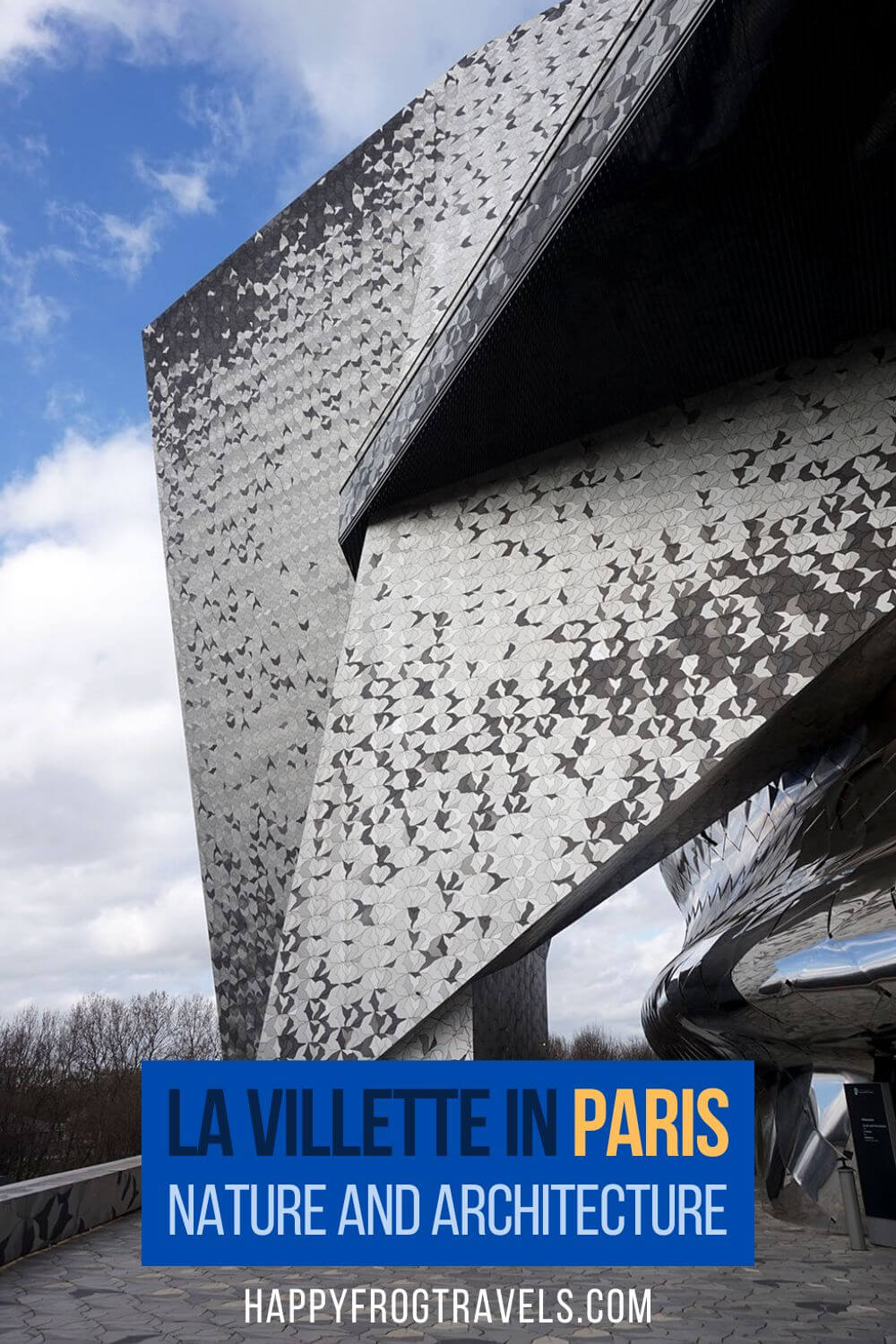
The latest addition, the Philharmonie de Paris, is the park’s most spectacular building. It was completed in 2015 by another renowned French architect, Jean Nouvel.
The building houses a large concert hall that can accommodate up to 2,400 spectators. Performances range from classical music to jazz and world music.
Its unusual shape almost resembles a closed eye. The façade is covered with thousands of aluminum tiles featuring bird patterns. In contrast to the rest of the park, it is a highly extravagant building.

Zénith Paris
Zénith Paris, one of the structures opened at the same time as the park, was never meant to be permanent. It was originally planned to remain for only three years, yet it still stands today.
It is a multipurpose arena hosting a variety of events, from pop and rock concerts to comedy shows.
The structure consists of a steel frame covered with a double-layered roof resembling a tent. This design allows for excellent acoustics and flexible interior space.

Cité des Sciences et de l’Industrie
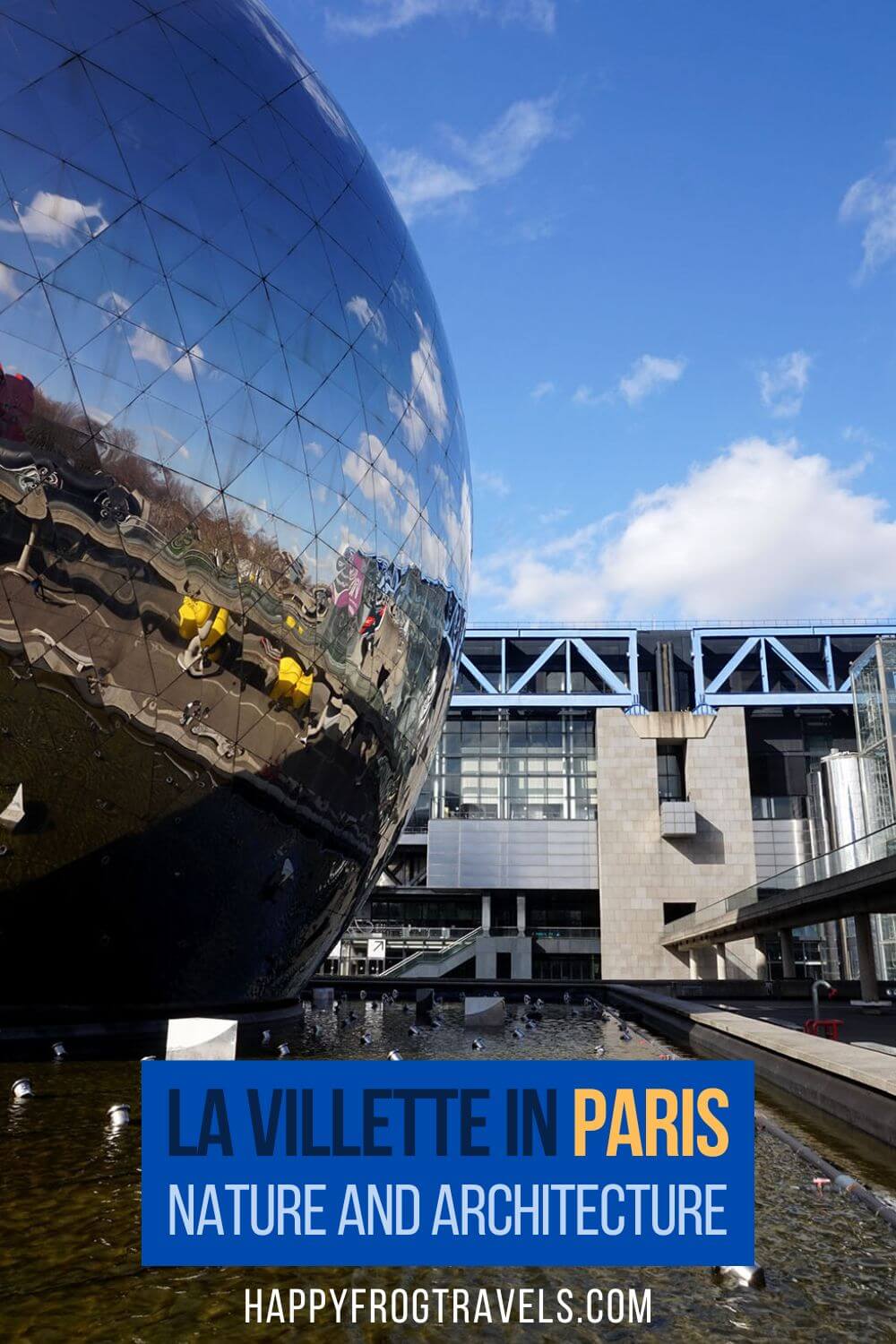
La Villette’s largest structure, the Cité des Sciences et de l’Industrie, occupies the park’s northeastern end. It is a massive complex surrounded by fountains, bridges, and small gardens.
The building houses the largest science museum in Europe, a planetarium, an IMAX theater, a shopping center, and even an old submarine.
It is a monumental rectangular high-tech structure with a glass façade and an exposed steel framework. A pedestrian bridge connects the main building with a geodesic dome that houses the IMAX theater.

Staying at La Villette
Moxy Paris La Villette is the best choice if you want to stay inside the park. Its rooms blend Parisian glamour with an 80s rock aesthetic, and some offer views of the park.
Hilton Garden Inn Paris La Villette is located just around the corner. Housed in a meticulously refurbished warehouse from the 1850s, it offers stylish rooms in a chic setting.
Our final recommendation is Hotel Restaurant Au Bœuf Couronné. Located right across from the park’s main entrance, it is a pet-friendly hotel with a top-class restaurant.

Where to Eat and Drink
If you get hungry or thirsty, there are several places where you can sit down and relax. For the widest variety of options, head to the restaurant area of the Cité des Sciences et de l’Industrie.
Our favorite place for lunch in the park is Restaurant Ventrus, located at the corner of Canal de l’Ourcq and Canal de Saint-Denis. Their delicious dishes are made from locally sourced ingredients.
Our two favorite bars, Bar Kermes and Bar 211, serve small bites and drinks in two different follies. Both have open-air terraces that are perfect for enjoying the sun.


Leave a Reply