


Cappadocia is known around the world for its stunning nature and architecture. A volcanic eruption that occurred millions of years ago, combined with millennia of erosion, created some of the most unusual landscapes on our planet.
Humans settled in this area thousands of years ago. They realized that its hills and rock formations were easy to carve, so they created entire cities within and around them.
The first people to arrive were the Hittites in the 18th century BC. Then came the Persians, Romans, and finally the Byzantines. The Turks arrived here in the 11th century. Most of Cappadocia’s surviving architectural heritage is Christian.

Underground Cities
The oldest and most fascinating structures in Cappadocia are its impressive underground cities. These settlements consist of networks of underground tunnels connecting living quarters, kitchens, wells, stables, and places of worship.
The first underground cities were built by the Phrygians in the 8th century BC. They were later occupied by Christians, who sought refuge here during periods of invasion and conflict.
Among the more than 30 discovered underground cities, Derinkuyu (the largest) and Kaymaklı (the second largest) are the most famous and are open to visitors. They were once connected by a network of underground passages.

Hermit Cells
While the underground cities were originally built by the polytheistic Phrygians, the first Christians who arrived in Cappadocia began excavating the rock above ground in the 1st century AD.
Many of the original carved dwellings were hermit cells created by Christians seeking isolation. That is why numerous individual cells were carved into the cliffs above ground.
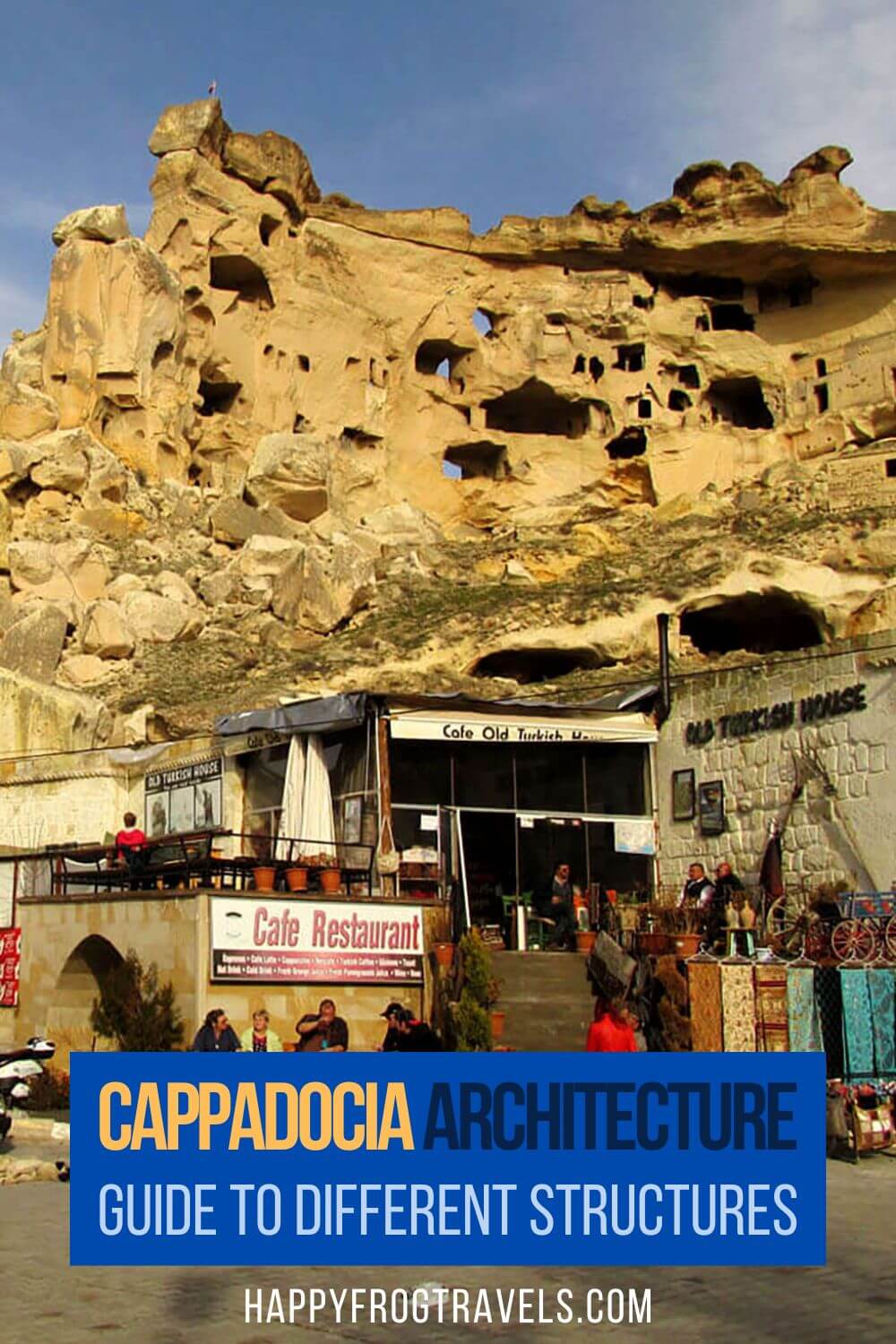
In some cases, these cells were carved directly into large rock formations. Several would often be clustered together, creating the appearance of Swiss cheese. In other cases, one or several cells were carved inside the so-called fairy chimneys.

Castles
When we talk about castles in Cappadocia, we are referring to the volcanic rock formations that tower above the surrounding landscape. They are filled with hermit cells, houses, and churches connected by numerous corridors, halls, and stairways.
The most famous of all is Uçhisar Castle. This 60-meter (200-foot) tall rock formation rises above the village of Uçhisar. The views from its summit are among the best in all of Cappadocia.
Ortahisar Castle is another impressive rock formation. Although it is slightly taller at 90 meters (300 feet), it appears smaller because it blends more naturally into the landscape. Other smaller castles include Temenni Tepesi in Ürgüp and Çavuşin Castle.

Churches
As soon as Christianity reached Cappadocia, local believers began creating places of worship. The earliest Christian churches were simple chambers with little more than an altar, often located within underground cities.
Over time, these churches became more elaborate and richly decorated. Since they were built during the Byzantine period, many follow the cross-in-square plan and sometimes include domes. The columns and frescoes are particularly impressive.
There are numerous ancient churches that are well worth visiting. Some of the finest examples can be found within the Göreme Open-Air Museum. The Dark Church and the Buckle Church are must-sees. Another outstanding monument is the Church of Saint John in Gülşehir.

Houses
As mentioned above, the first Christian inhabitants built their homes, or cells, within the cliffs above ground. Originally, these dwellings were entirely carved into the rock, providing places of refuge and isolation.
With the arrival of Turkish settlers, there was no longer a need to hide, as the entire region came under their rule. This is when additional structures began to be added to the rock-cut dwellings.
These new additions were mostly square-shaped, sometimes featuring arched ceilings. They often formed clusters of buildings, with some structures partially carved into the rock. Many of them have since been converted into hotels.

Mosques
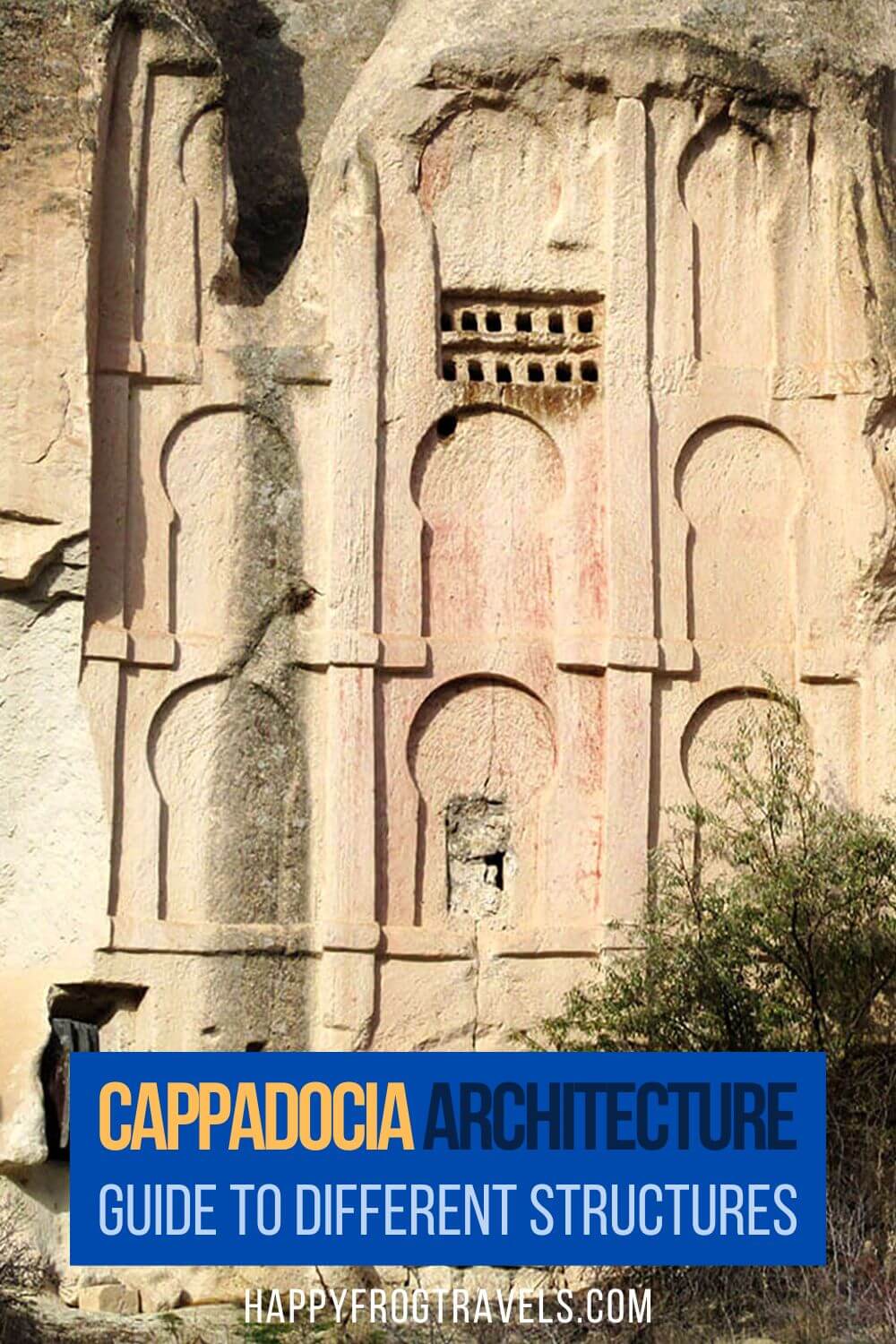
Mosques began appearing in Cappadocia in the 11th century following the Turkish conquest. However, the oldest surviving mosque is the 800-year-old rock-cut Alaaddin Mosque in Avanos. Although it was originally built during the Seljuk period, its current appearance largely dates from Ottoman times.
Most local mosques are modest in size and decoration. They typically follow the Ottoman model, consisting of a square prayer hall topped by a single dome and accompanied by a minaret. They are generally built of stone and feature pointed-arch windows.
There are also several mosques carved into the rock. The most famous is the 600-year-old rock-cut mosque in Taşkınpaşa. This charming village is also home to a beautiful 14th-century mosque and madrasa.

How to Visit and Where to Stay
Whether you visit Cappadocia in winter or summer, Göreme is the best place to stay. This picturesque town lies in the heart of Cappadocia, close to some of its finest architecture.
In Göreme, we stayed at the Aren Cave Hotel and Art Gallery. We loved its beautifully appointed rooms, charming courtyard, and the views from the restaurant.
On our second visit to Cappadocia, we decided to stay in Çavuşin. Located just a short distance from Göreme, it felt much less crowded and even more authentic. We stayed at the superb Azure Cave Suites and loved everything about it.



Leave a Reply