


The Stockholm Metro System is an underground art gallery. In fact, the city promotes it as the world’s longest art project. The country has spared no effort in promoting itself. But what it’s really like? We’ve been to Stockholm several times and used the metro daily. Likewise, we took a guided Stockholm Metro (Subway) art tour around the best stations.
Our lovely guide Tiiu shared valuable information with us. The tour takes one hour. We visited 5 interesting stations, all in the center. We learned about its history and how names and designs were chosen. We liked it so much, that we decided to go beyond the center. Thus, we did our own tour of the Stockholm metro system to faraway stations the next day.

Stockholm Metro Art Tour
We agree that some stations are quite pretty. However, we couldn’t help but wonder if some were being oversold. We visited many of them and most looked pretty normal to us. Tiiu had proudly told us a station with something as basic as a designed bench, a small statue, or colored ceramic tiles is considered art.
From that same perspective, can we call all metro stations around the world art? After all, each bench or litter bin had to be designed somewhere. Don’t get us wrong: there is no doubt that the Stockholm Metro has gorgeous station art. We suggest following our map to get to the best stations.
Stockholm Metro Station Art
Many stations bear the name of the place where they are. Besides, their design is somehow related to the purpose of that place. Thus, it is symbolic while helping you to understand where you are. Additionally, it gives us an insight into how design concepts changed over time.
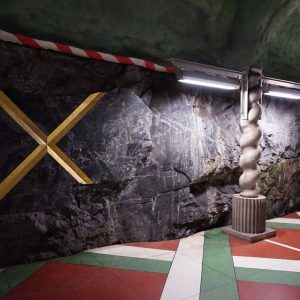
The underground’s walls are mostly granite. Stations from the 50s have their walls entirely covered. Those from the 60s have some parts covered. The 70s tend to show more of the original walls. The thin layer of sprayed concrete is a canvas. We love the combination of art and the natural beauty of granite.
Best Stockholm Metro (Subway) Stations
Stadion
1973, red line
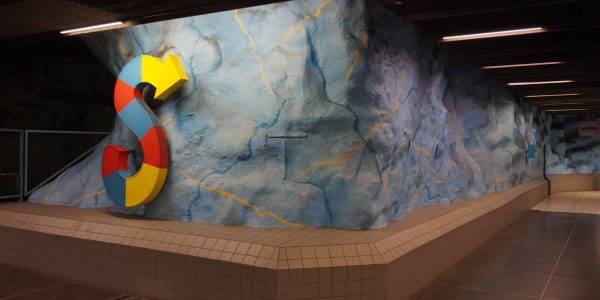
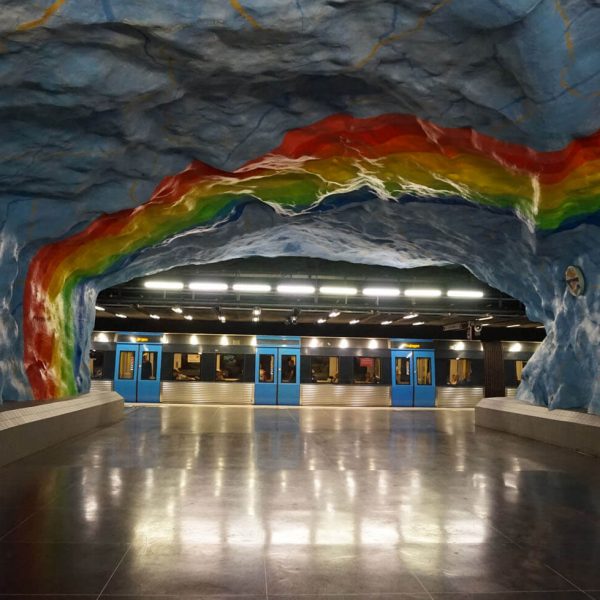
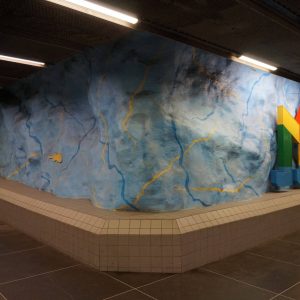
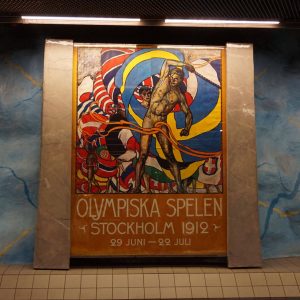
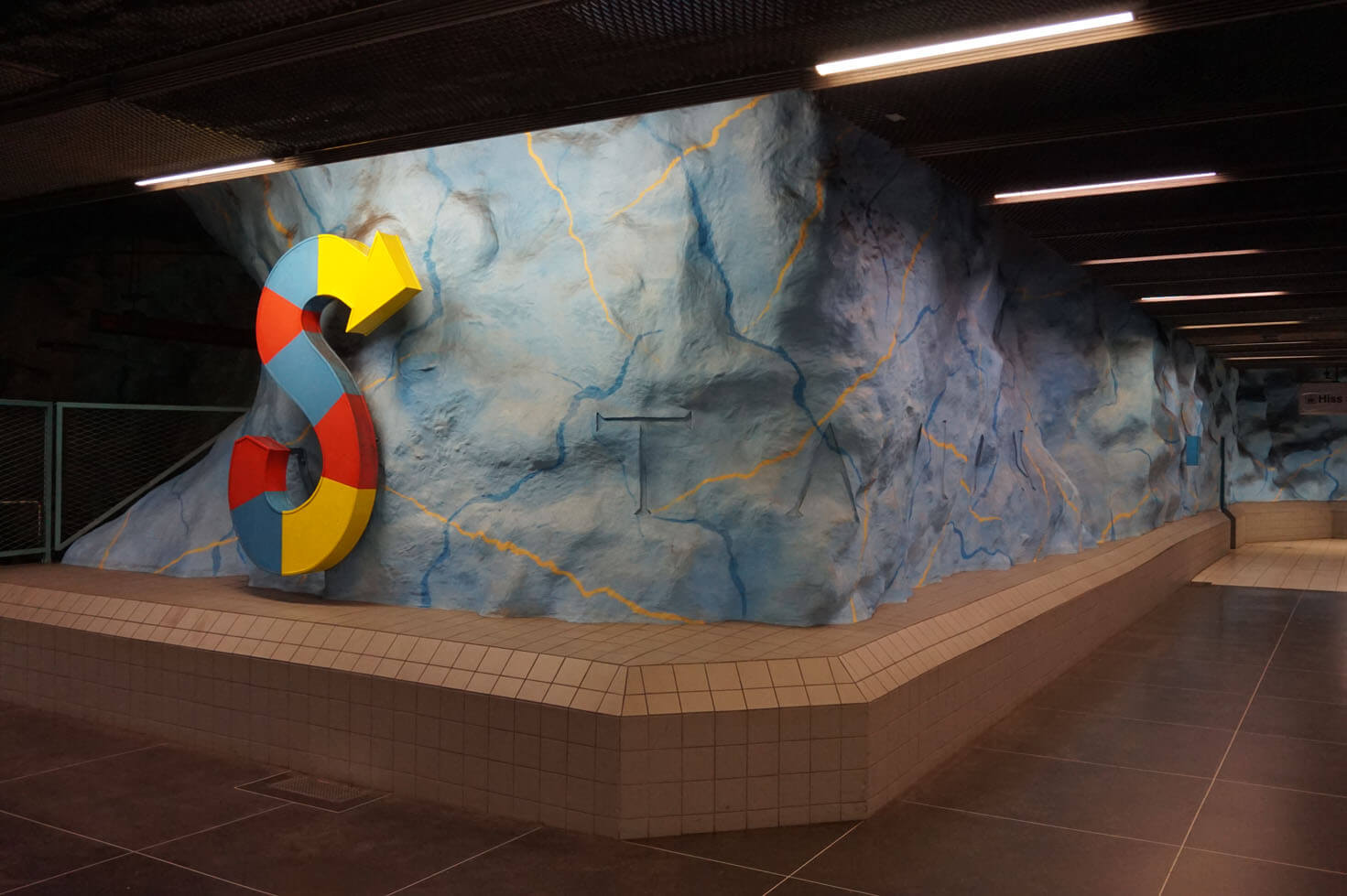
Built next to the Stockholm’s Stadion, it embraces the free spirit of the Olympic Games hosted by the city in 1912. It’s a massive cave painted in blue. The huge rainbow represents the five continents. Two large letters and symbols point in different directions. S Letter to the south entrance to the Stadium, while the M letter to the Music Academy.
There is another reason for the station’s giant rainbow. The Stadium is one of the oldest cave stations on Stockholm’s metro. The city authorities feared it would look too dark. They thought the rainbow would remind us of the sky above. Åke Pallarp and Enno Hallek did the imposing art piece. The steel sculpture at the Nybrogatan exit is by Lars Erik Falk.
Universitetet
1975, red line
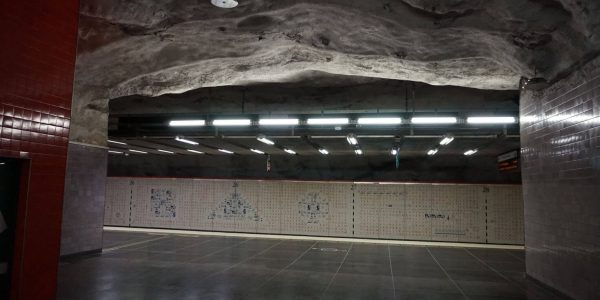
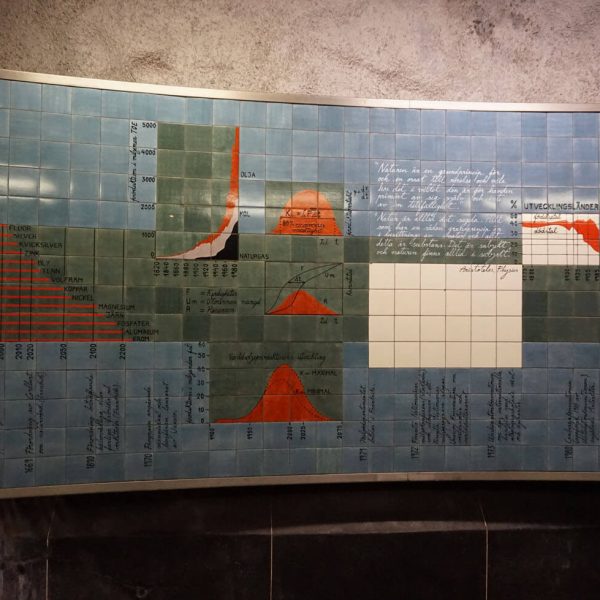
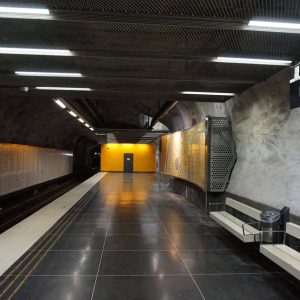
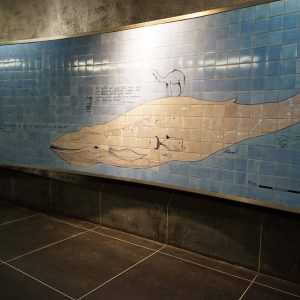
As its name says, it is near Stockholm University. The Museum of Natural History is nearby. Thus the details on both institutions. Belgian artist Françoise Schein designed 12 large panels brought from Portugal. These showcase science and the UN Declaration of Human Rights. It’s all very uplifting.
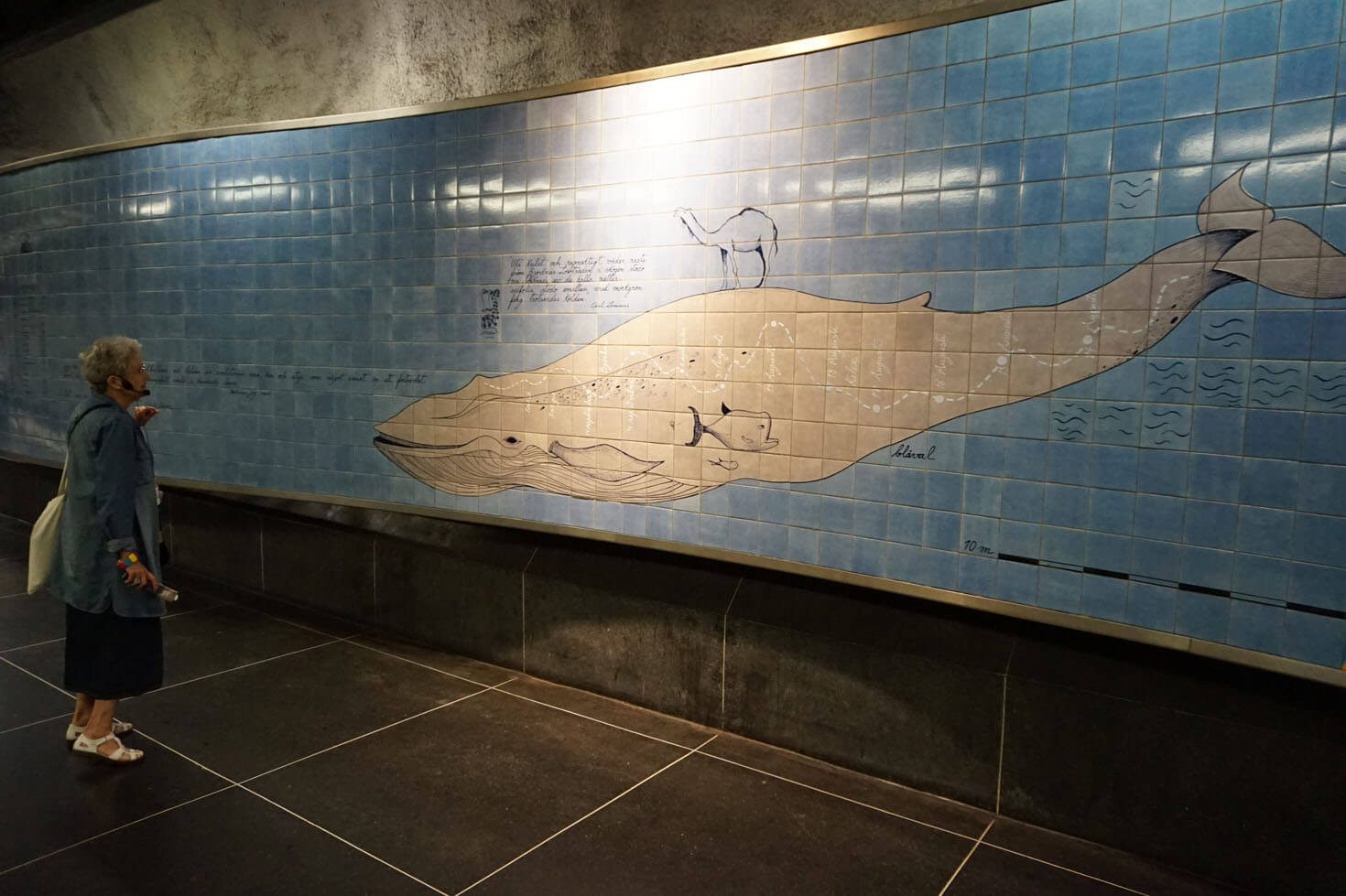
She paid special tribute to Carl von Linné. Many consider the Swedish biologist the father of modern taxonomy. He called the poor the slag of society. He believed some races were brighter than others. Thus, only Europeans should have children. The giant piece Art of Looking depicts von Linne’s travels around Laponia. Too bad it doesn’t depict his shameful ideas.
Tekniska Högskolan
1973, red line
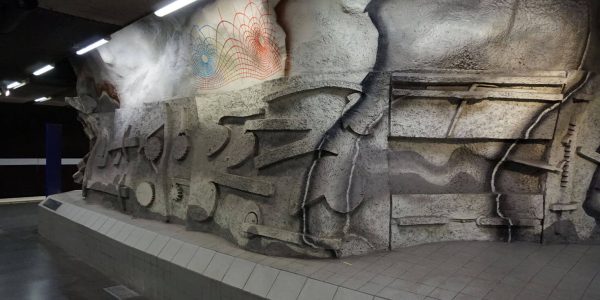
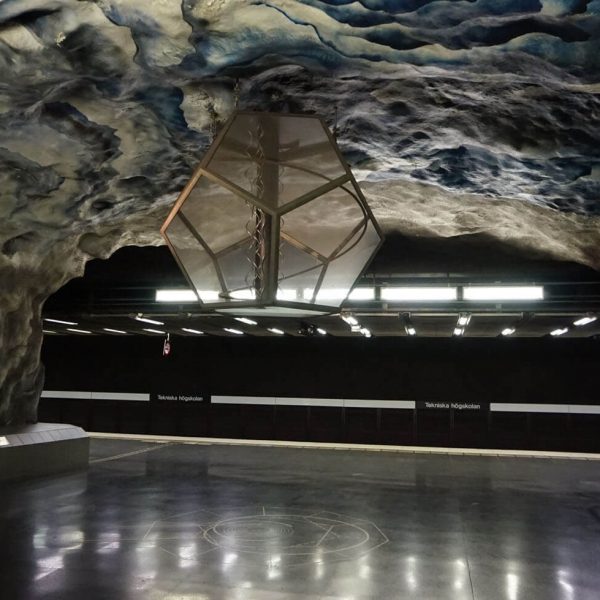
This station is named after the Royal Institute of Technology, Sweden’s top engineering school. Lennart Mörk did the paintings, figures, and sculptures. Some represent the four basic elements: fire, air, water, and earth. Our favorite is the one showing the universe and the laws of nature.
There’s artwork hanging from the ceiling. Look for the wing of Icarus, Newton’s apple, and the black hole of the universe. There are also numerous quotes from the history of science. Together with Stadium Station, it got the Kasper Salin Prize for its high architectural quality.

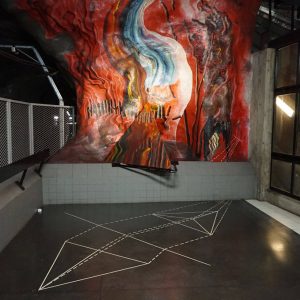
T- Centralen
1957, red, blue and green lines
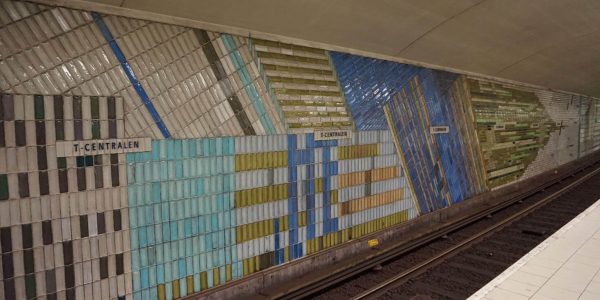
Stockholm’s Main metro station owes its name to the Central Train Station outside. It is the only station where all the three main lines connect. It opened in 1957 and was the first to feature art. The modestly decorated green and red platform and some ceramic tiles resembling traffic signs are considered art.
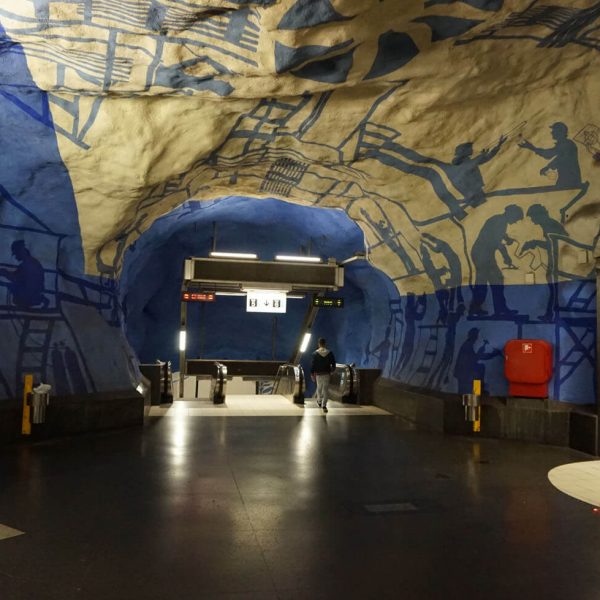
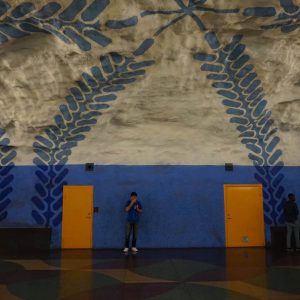
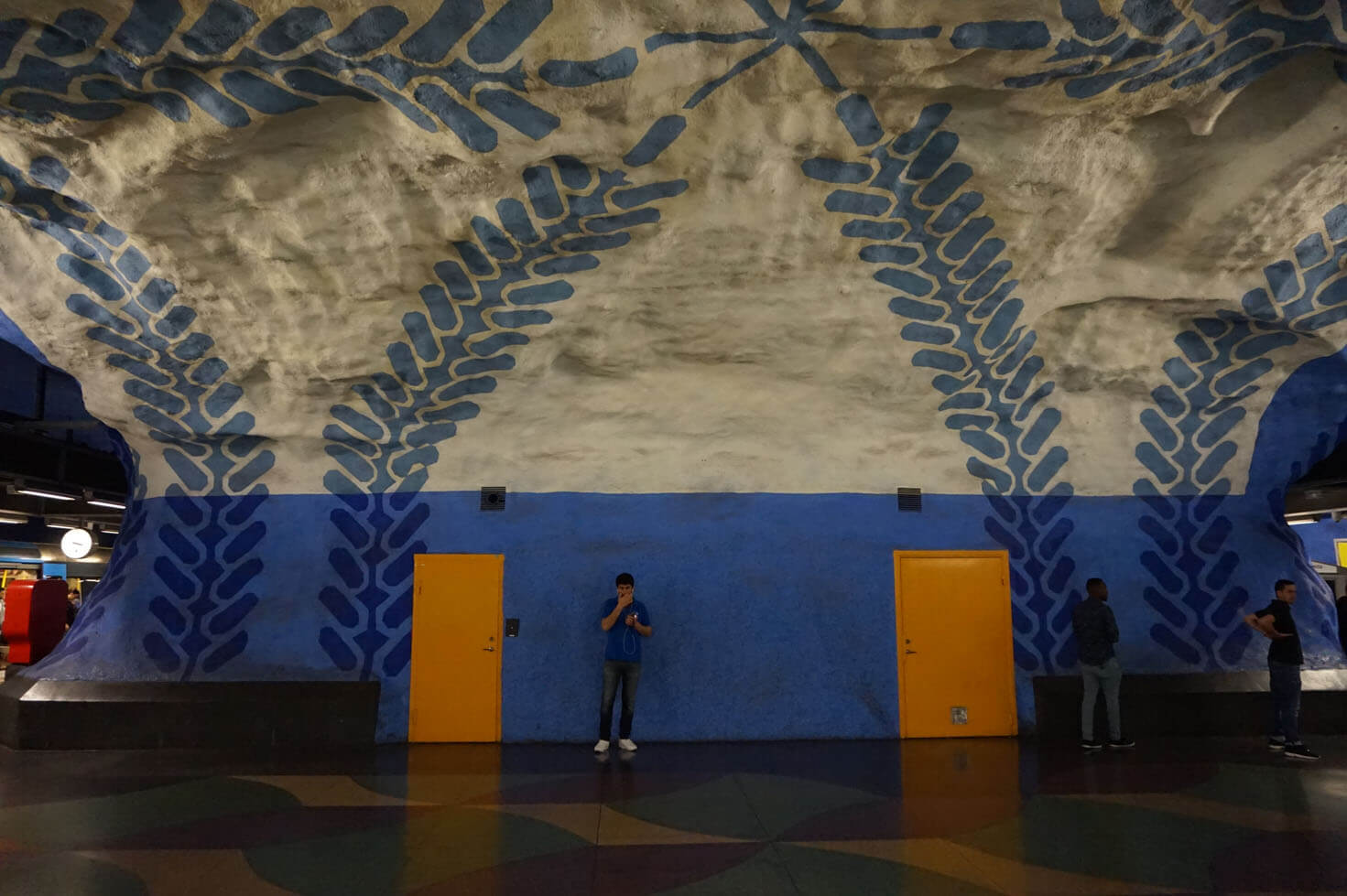
The much more elaborate blue line platform is from 1975. You’ll easily recognize it from its walls covered in blue leafs. Artist Per Olof Ultvedt chose the shades of blue because of their relaxing effect. Quite convenient as commuters here are always in a hurry! He also painted the scenes of the workers who built the station.
Kungsträdgården
1977, blue line
Stockholm’s Main metro station owes its name to the Central Train Station outside. It is the only station where all the three main lines connect. It opened in 1957 and was the first to feature art. The modestly decorated green and red platform and some ceramic tiles resembling traffic signs are considered art.
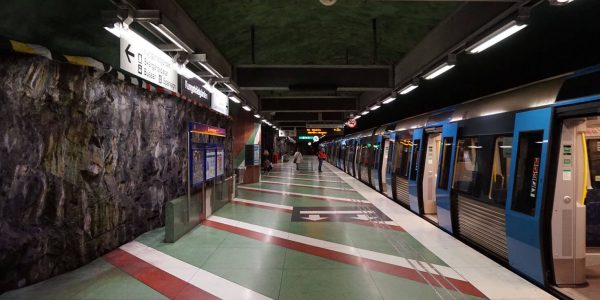
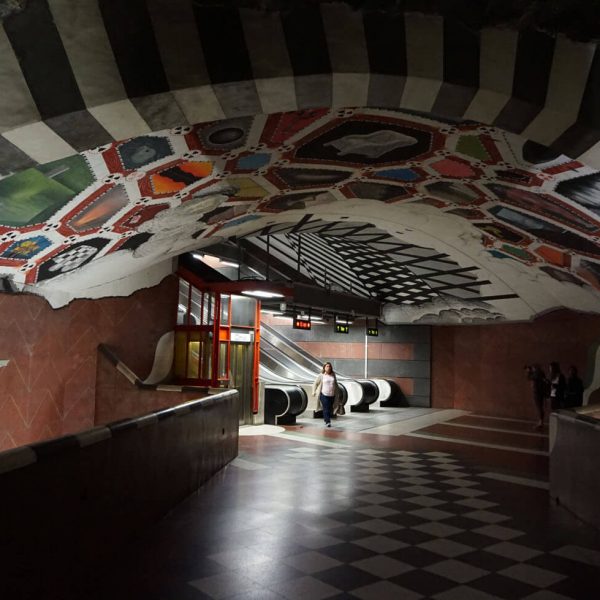
The much more elaborate blue line platform is from 1975. You’ll easily recognize it from its walls covered in blue leafs. Artist Per Olof Ultvedt chose the shades of blue because of their relaxing effect. Quite convenient as commuters here are always in a hurry! He also painted the scenes of the workers who built the station.
Thorildsplan
1952, green line
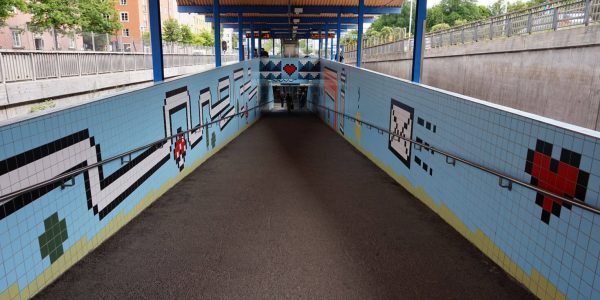
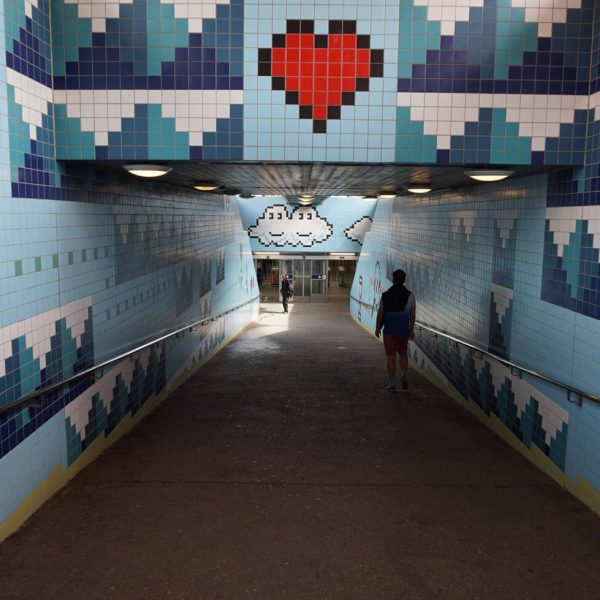
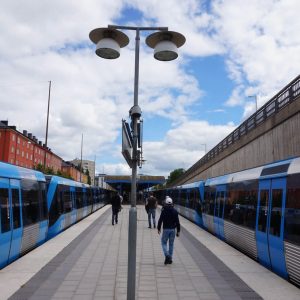
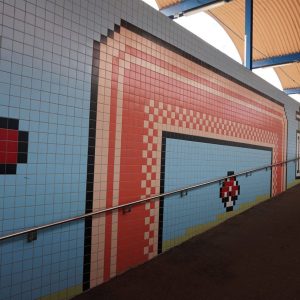
The original ground station in Kristineberg is from the 1950s. Since it was vandalized so badly, it had to be fully refurbished in 2008. The ceramic tiles were used in a completely different way. The whole station looks like a giant videogame! Look out for Pac-Man, Mario Bros, and other 8-bit pixilated images.
Lars Arrhenius designed the station. The authorities demanded that he use the ceramic tiles. We believe his little hearts and clouds are inspiring. The light blue walls relax and are playful. The bomb ready to be off and the industrial plant are genius. The giant hands tell commuters exactly where to go.
Stadshagen
1975, blue line
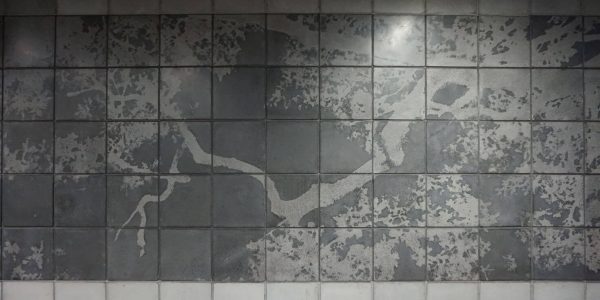
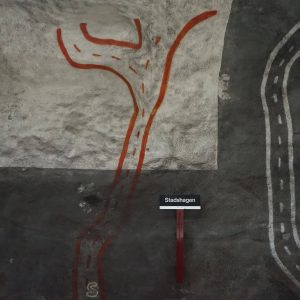
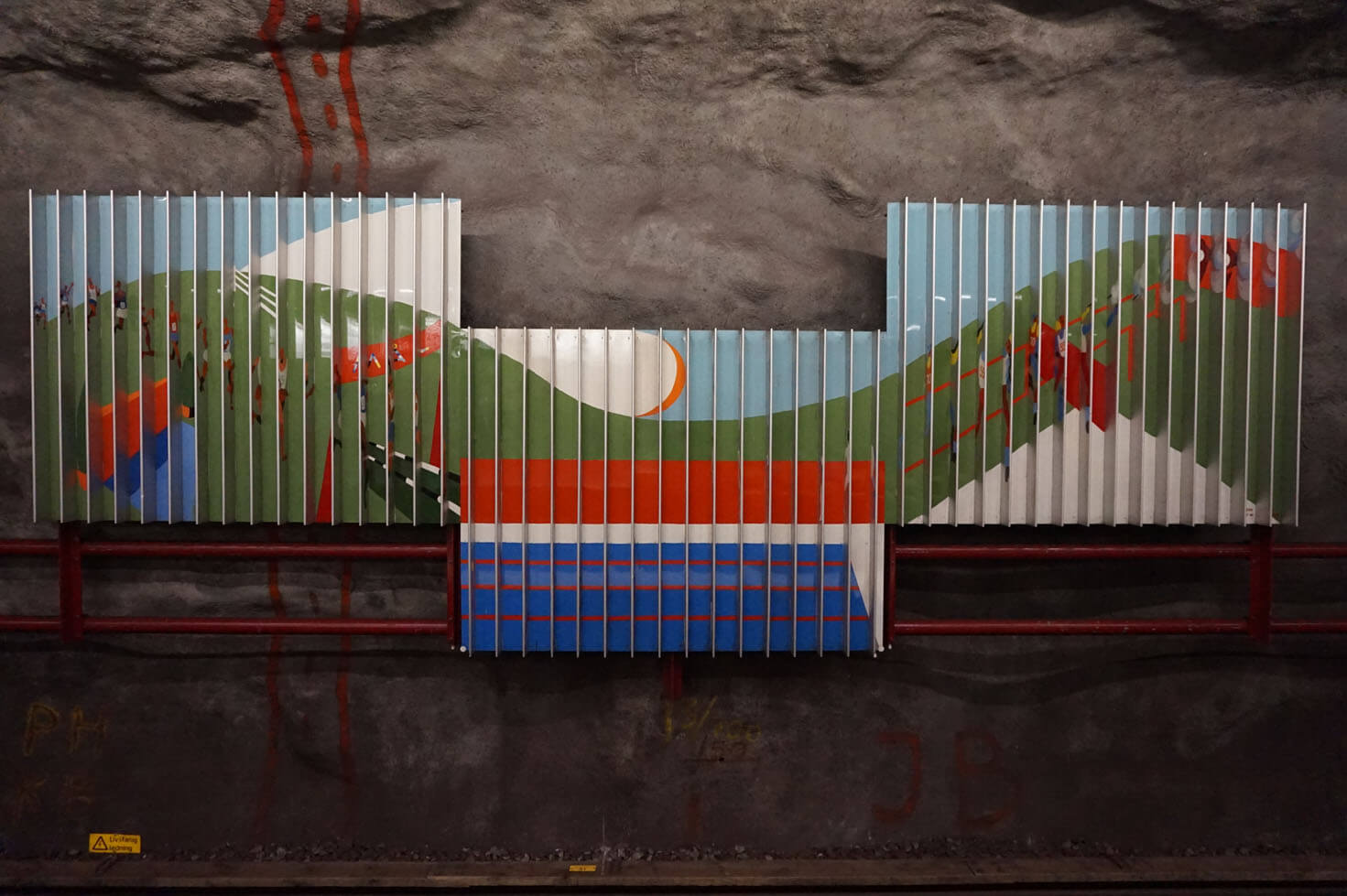
The station is next to the Stadshagen Stadium. Thus, it is all about sports. Its curvy ceiling is grey, with roads leading to different sports. The large boards on the walls are by Lasse Lindqvist. These parallel panels display two different images on each side.
Depending on the direction you are coming from, you can see a different picture. While you are moving, it feels like the picture is moving too. One board represents a football match. Coming from one side, you’ll see one team scoring a goal. From the opposite side it feels like the other one scored.
Västra Skogen
1975, blue line
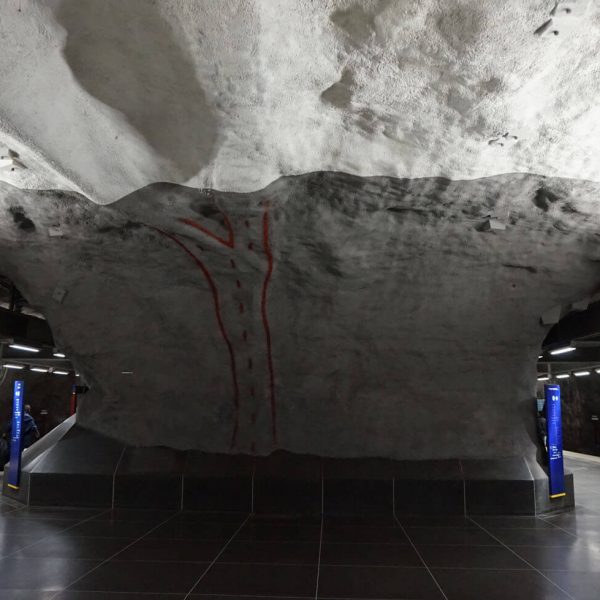
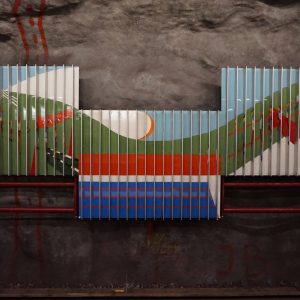
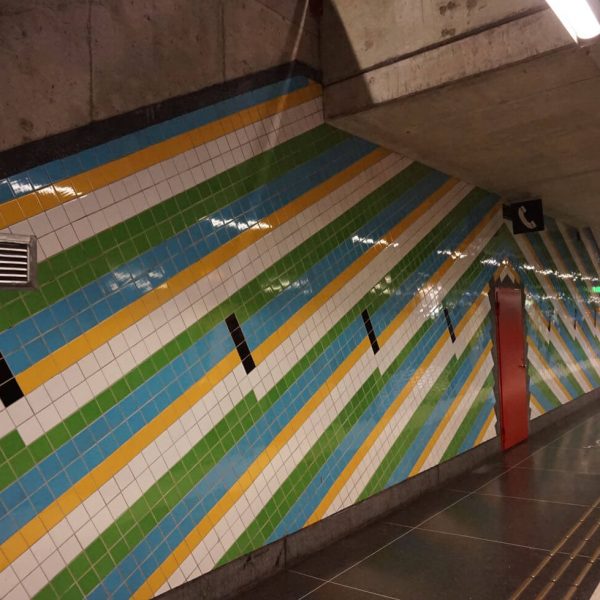
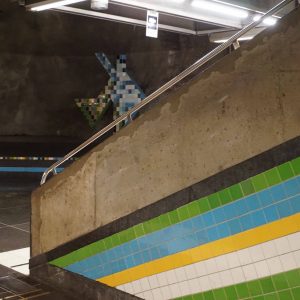
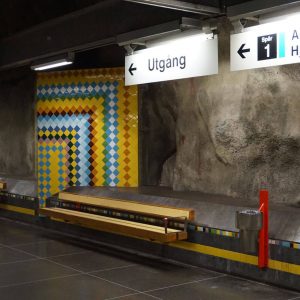
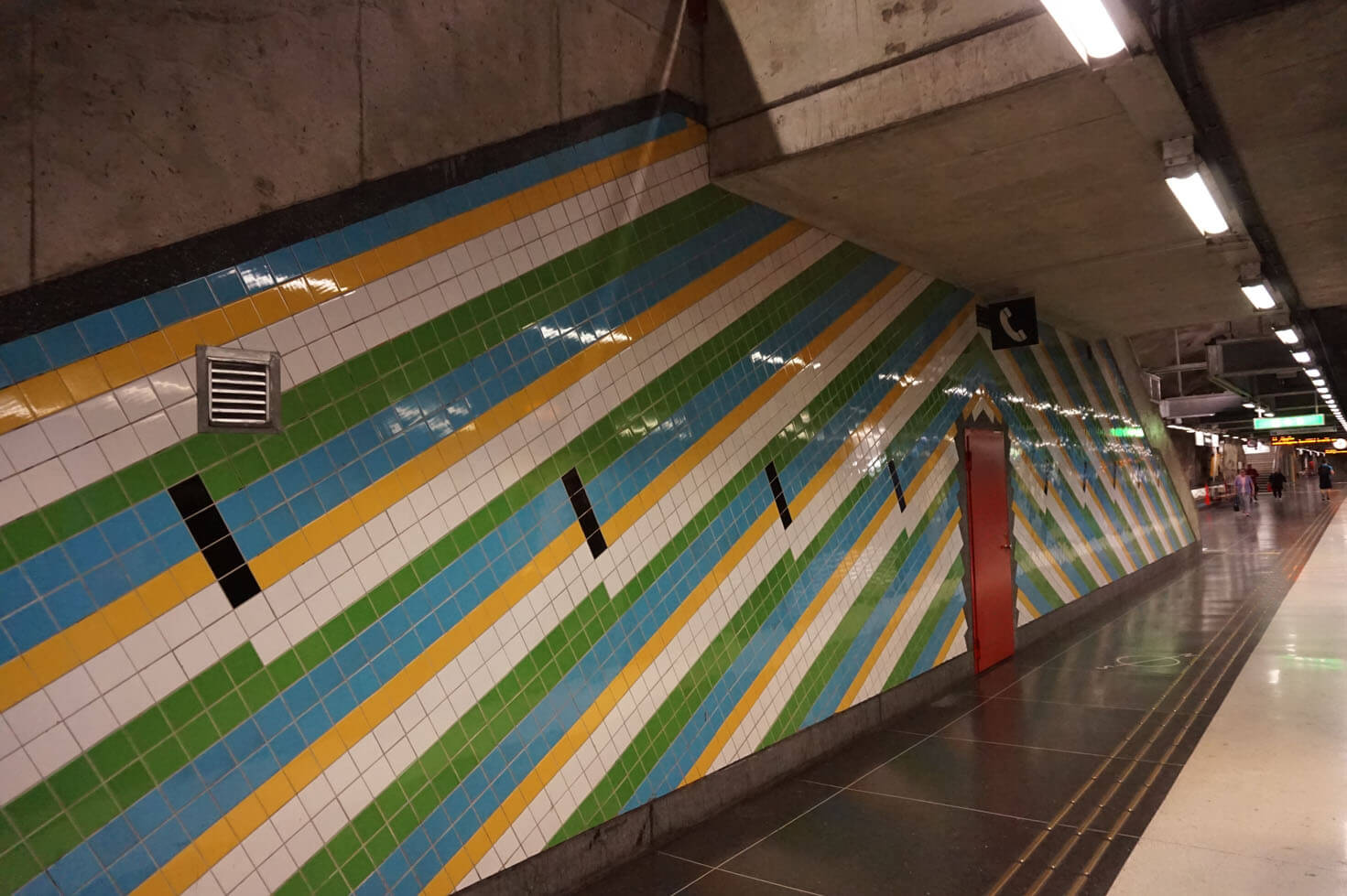
Two branches of the blue line connect here. That’s why the station has three platforms. The main area is a big cave. The walls are exposed concrete with occasional ceramic tiles. These create colorful and fun patterns. Western Europe’s longest escalator is in the station.
The art is by famous local artist Sivert Lindblom. He found inspiration in the surrounding forest. You’ll notice different shapes made of colorful tiles on the walls. Likewise, continuous lines follow the platforms. Look for the artist’s profile. He appears in several places.

Solna Centrum
1975, blue line
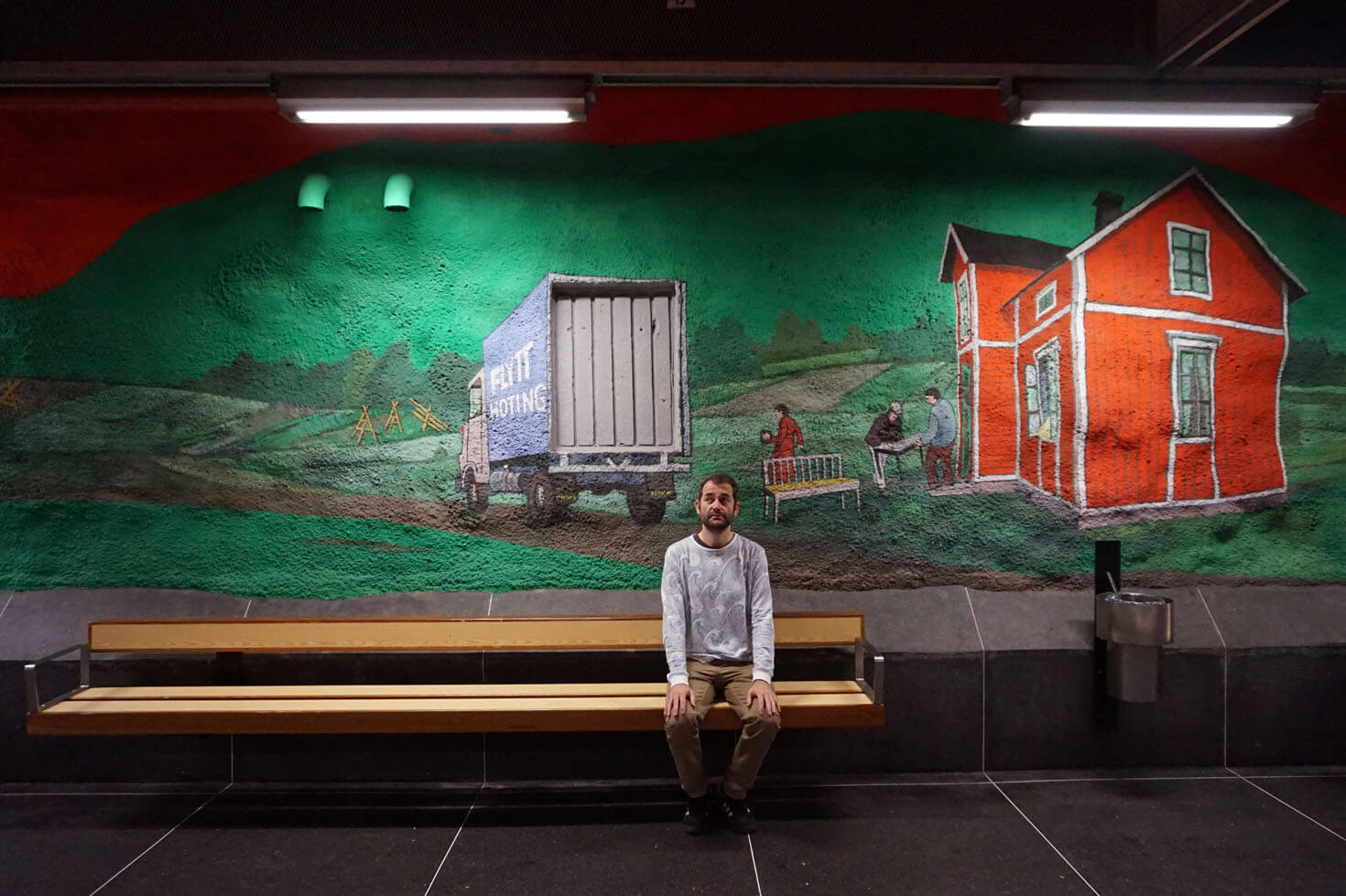
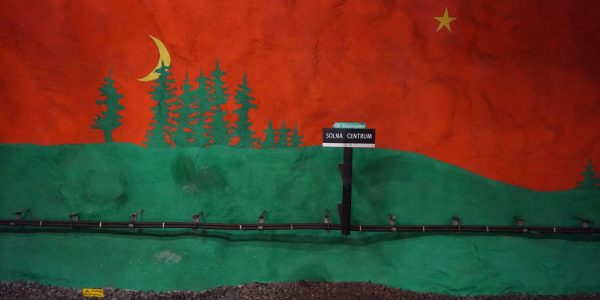
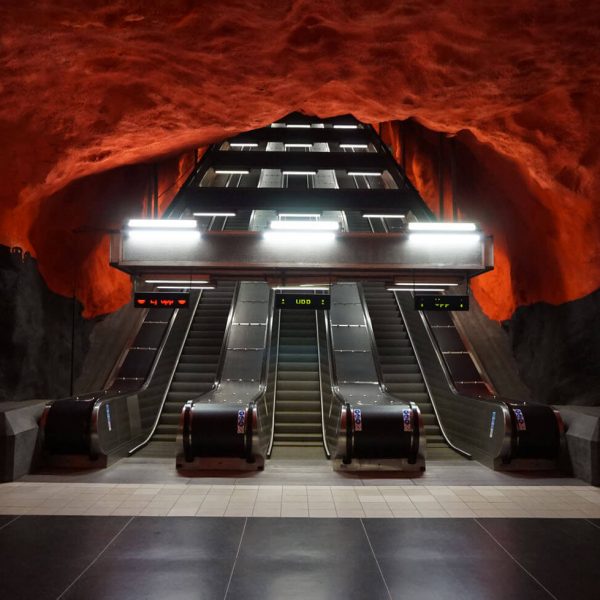
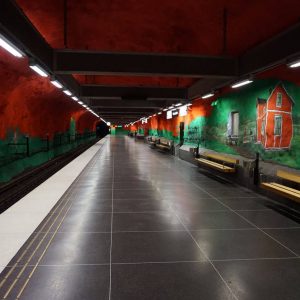
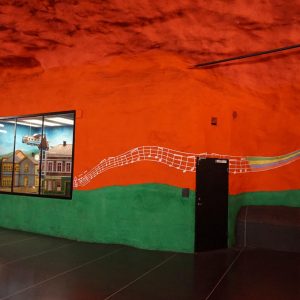
Solna Centrum has a strong message for all of us. The station makes us question rural life and environmental destruction; hence the burning red behind images of green forests and small cottages. The artist painted pollution slowly creeping on animals and nature. The colorful rainbows represent hope!
Scenes from local life appear in niches behind a glass wall. On one, residents gather in front of a business being shut down. Another one depicts the neighborhood of Old Hagalund before it was demolished. The third one shows a man watching the landscape around his disappearing cottage.
Rådhuset
1975, blue line
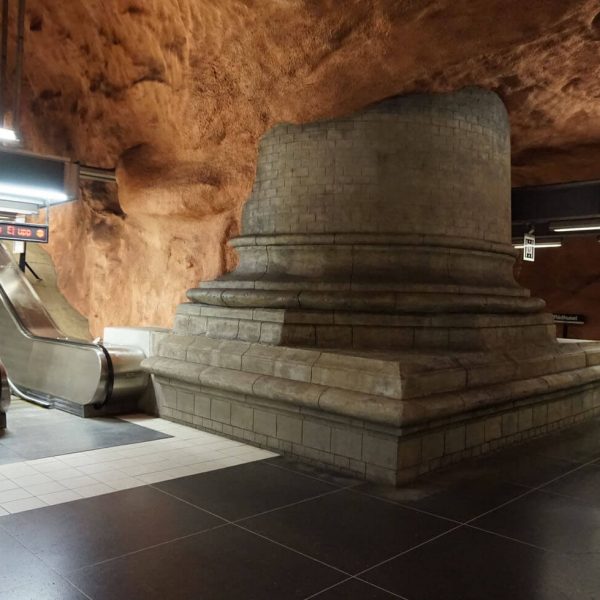
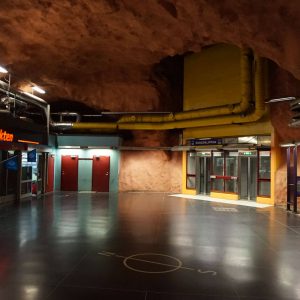
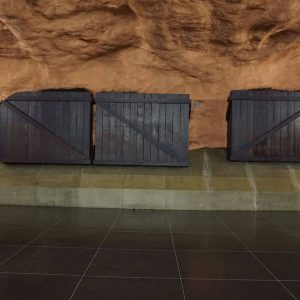
Rådhuset station is full of history. It got its name from the City Hall outside. The base of a massive chimney alters the simplicity of its orange-pink bedrock. You will see wooden boxes that represent an old measurement unit called parm. The bags symbolize a medieval market.
The authorities wanted to revive the old Kungsholmen area. They hired local artist Sigvard Olsson for the station. Since Kungsholmen used to be a marketplace, he used baskets and hay. The latter to pay an homage to the farmers. On the other hand, the chimney represents the industrial age.














Garth
Wow this is amazing would love to see some of these, especially the 8-bit art. And I’ve been to Stockholm but never used the Metro! next time. Thanks for sharing.
happyfrogtravels
Thanks for your comment. We enjoyed so much taking a ride and visiting random stations. Now you have a perfect excuse to go back to Stockholm!