


Seoul didn’t conquer us immediately. The first image we got was that of a typical world metropolis full of traffic and high-rise buildings. But at every corner there was something new and surprising.
We visited 5 royal palaces (one of them a UNESCO World Heritage Site), 2 old city gates, several old Buddhist temples, churches, gorgeous parks and cool modern and contemporary architecture.
However, our favorites were its quaint historic neighborhoods and recent urban regeneration projects. Seoul has clearly understood the importance of public space, and two recent projects perfectly showcase this.

Historic Architecture
Royal Palaces
Seoul’s Royal architecture is represented by five palaces built during the Five Century long reign of the Joseon Dinasty. They are: Changdeokgung, Changgyeonggung, Deoksugung, Gyeongbokgung and Gyeong huigung.
The palaces follow Confucian philosophy, exuding harmony and hierarchy. A central axis organizes the complex, with state affairs positioned at the front and center, and the residential quarters at the back. The buildings are low-rise, made of wood on stone pedestals and topped with tiled roofs.
Gyeongbokgung Palace was the main royal palace, home of the kings and the government. We enjoyed so much watching the guards changing ceremony with all the elegant costumes parading in front of Mount Bugak.
Changdeokgung Palace was the favorite of many princes. Just like the other palaces it was destroyed during the Japanese rule, although to a lesser extent and in 1997 UNESCO recognized it as a World Heritage Site.

Royal Tombs
Although we found the palaces beautiful, they do somewhat resemble their Chinese and Japanese counterparts. The Royal Tombs of the Joseon Dynasty, on the other hand, are something entirely different.
These unique resting places blend nature and architecture seamlessly and are rich in symbolism. Influenced by Confucianism, they embody moral order and dynastic continuity.
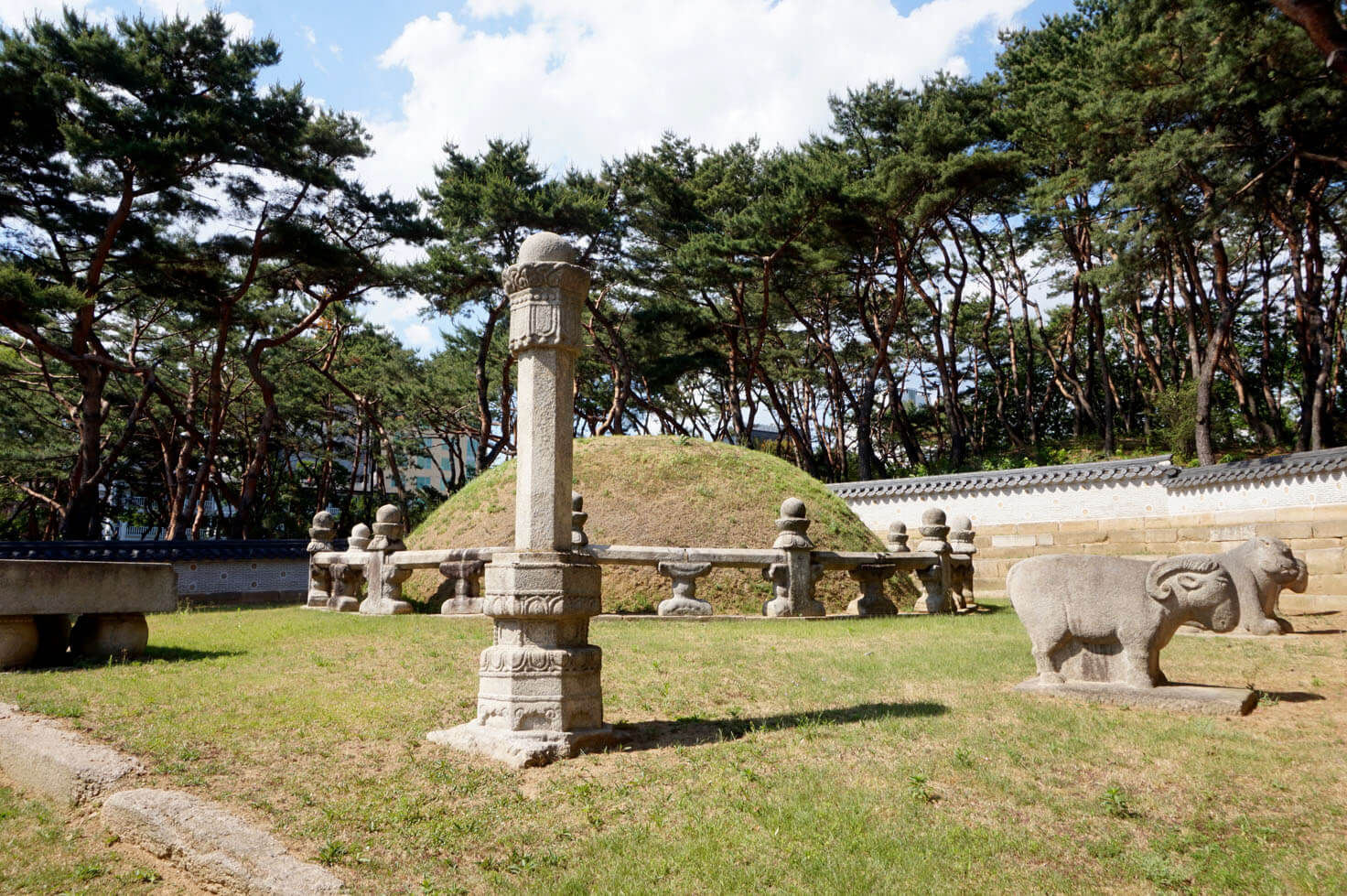
A typical tomb consists of a grassy meadow surrounded by trees. The royals were buried beneath an artificial, rounded green mound, enclosed by a stone retaining wall and a low surrounding barrier. The stone platforms and ritual altars are aligned according to the principles of Korean feng shui (known as pungsu-jiri).
Among the 40 royal tombs inscribed as a UNESCO World Heritage Site, several are located within the city. We visited Seolleung and Jeongneung in the Gangnam District and were struck by their serene atmosphere. Other notable sites include Donggureung, as well as Hongneung and Yureung.
We also visited the impressive royal tumuli in Gyeongju.
Seoul City Wall
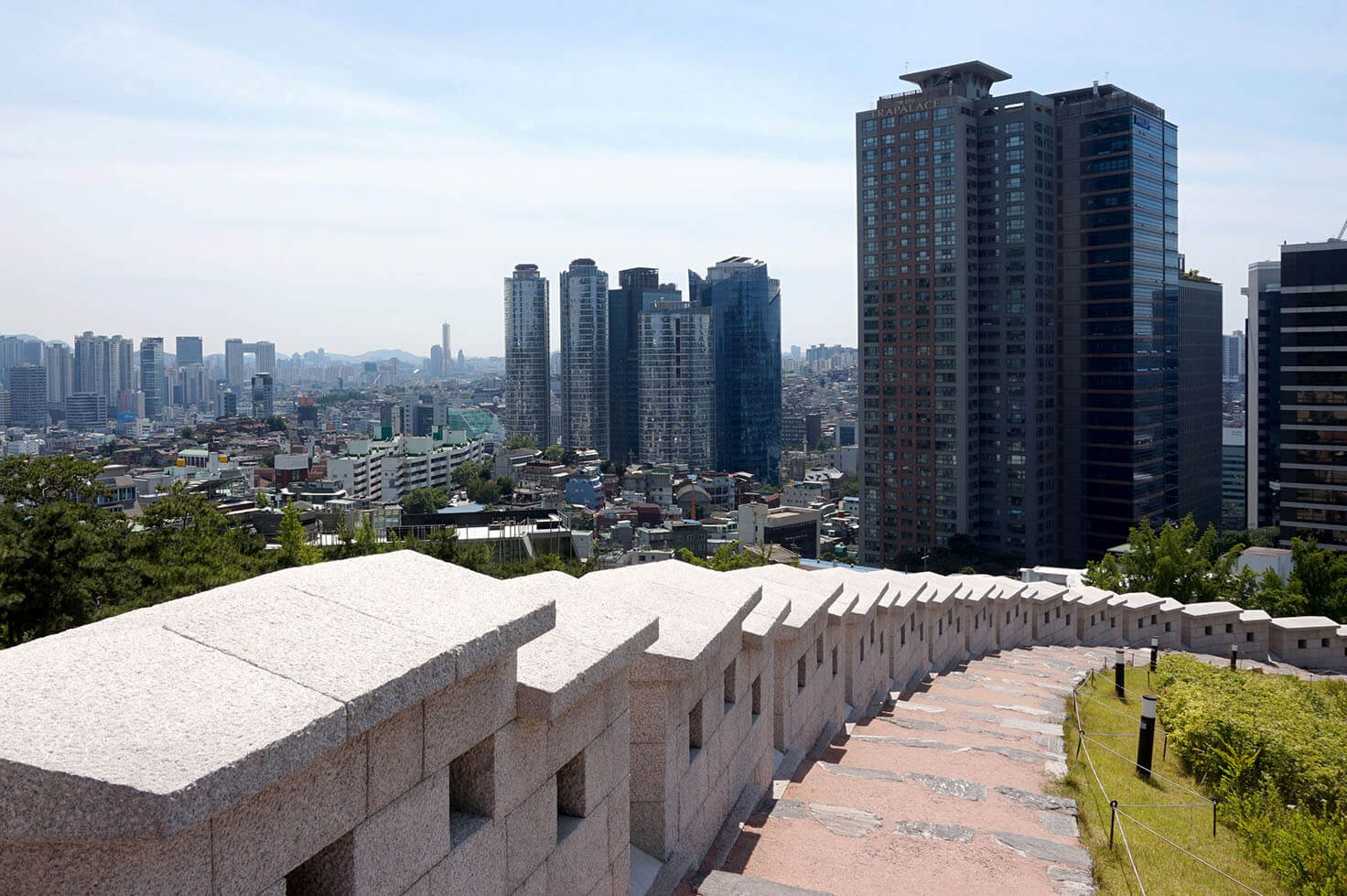
One of our favorite walks in Seoul was along its impressive City Wall. The 18 km (11-mile) wall was built by King Taejo, the founder of the Joseon Dynasty, in the late 14th century.
Originally, it was constructed with small, rounded stones connected with mud. In the 15th century, these were replaced with rectangular stones. It received its final facelift in the early 18th century, when larger, uniform stones were added.
At first, the wall served as a boundary between the inner and outer city. After the Japanese invasions in the late 16th century, it took on a more defensive role.
What we loved most is how it adapts to Seoul’s mountainous terrain. The section within beautiful Namsan Park is especially pleasant. Of the original eight gates, only six survive. The most impressive are Namdaemun and Dongdaemun.
Colonial Architecture
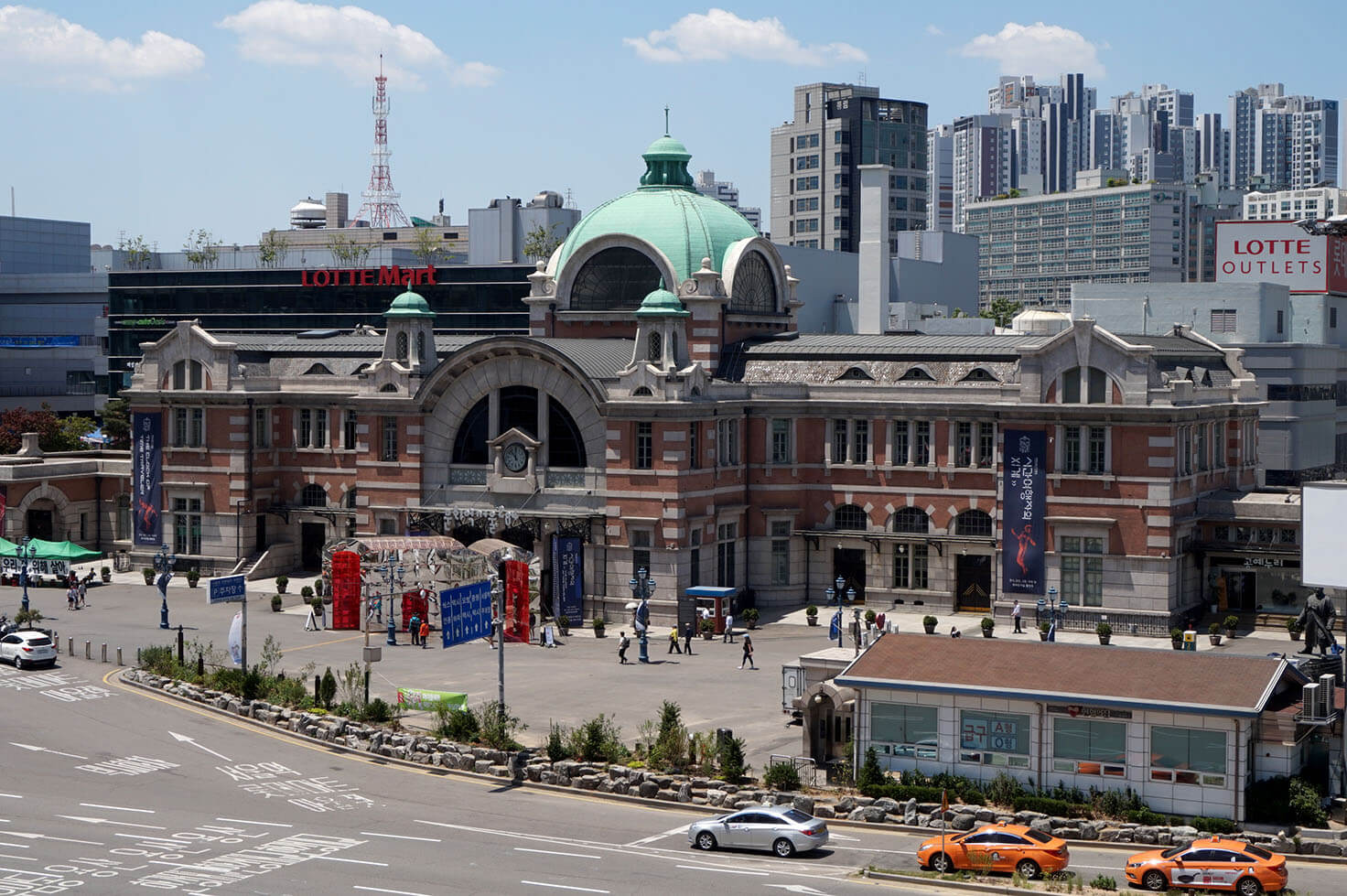
If you’ve been to Tokyo or Taipei, you’ve probably seen buildings similar to some in Seoul. What they have in common are principles typical of early 20th-century Japanese architecture.
Today, very few buildings from this period still stand. Those that remain clearly stand out from the rest of the city. Through them, the Japanese authorities sought to project power, authority, and control.
Buildings from this era are typically monumental and symmetrical. They often have a somewhat European appearance, incorporating neoclassical elements interpreted through a Japanese lens.
The three most famous examples from this period are Seoul City Hall, the Old Seoul Station, and the Bank of Korea Money Museum. All three are highly photogenic.
Contemporary Architecture
Seoul City Hall
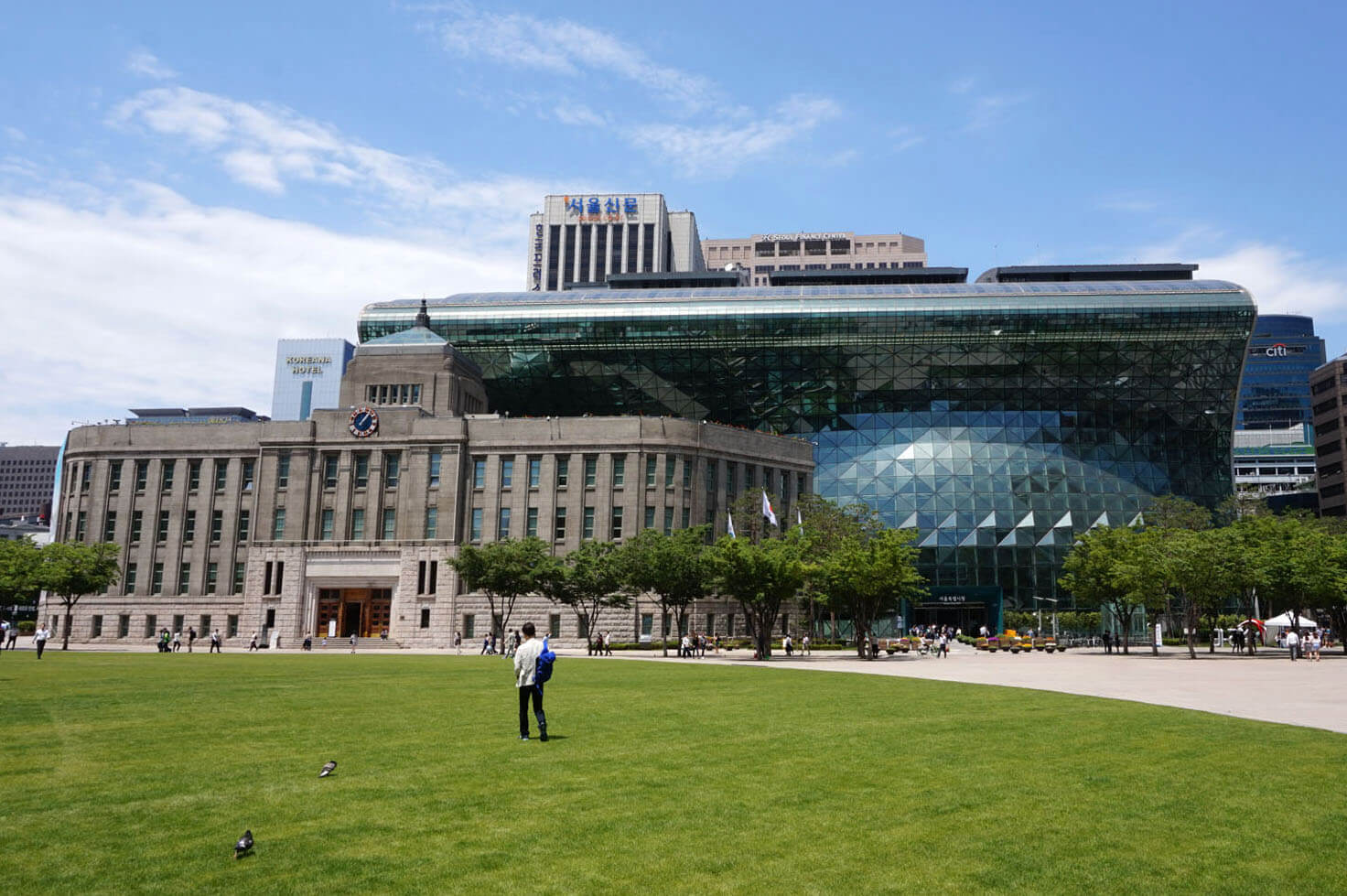
Seoul City Hall is an interesting example of old and new architecture: the old built during the Japanese rule while the new from 2012. Shades of leaves inspired Its curvy surface.
The old and the new collide here in a very obvious way. The older part is monumental, symmetrical, and heavy, while the new addition is transparent, open, and light striving to integrate into the surrounding public space. It is precisely this contrast that makes the building so exciting.
We wandered around its glass atrium, admiring the striking façade. Its automatic shading system and natural ventilation make it one of the most energy-efficient buildings in Seoul.
Dongdaemun Design Plaza
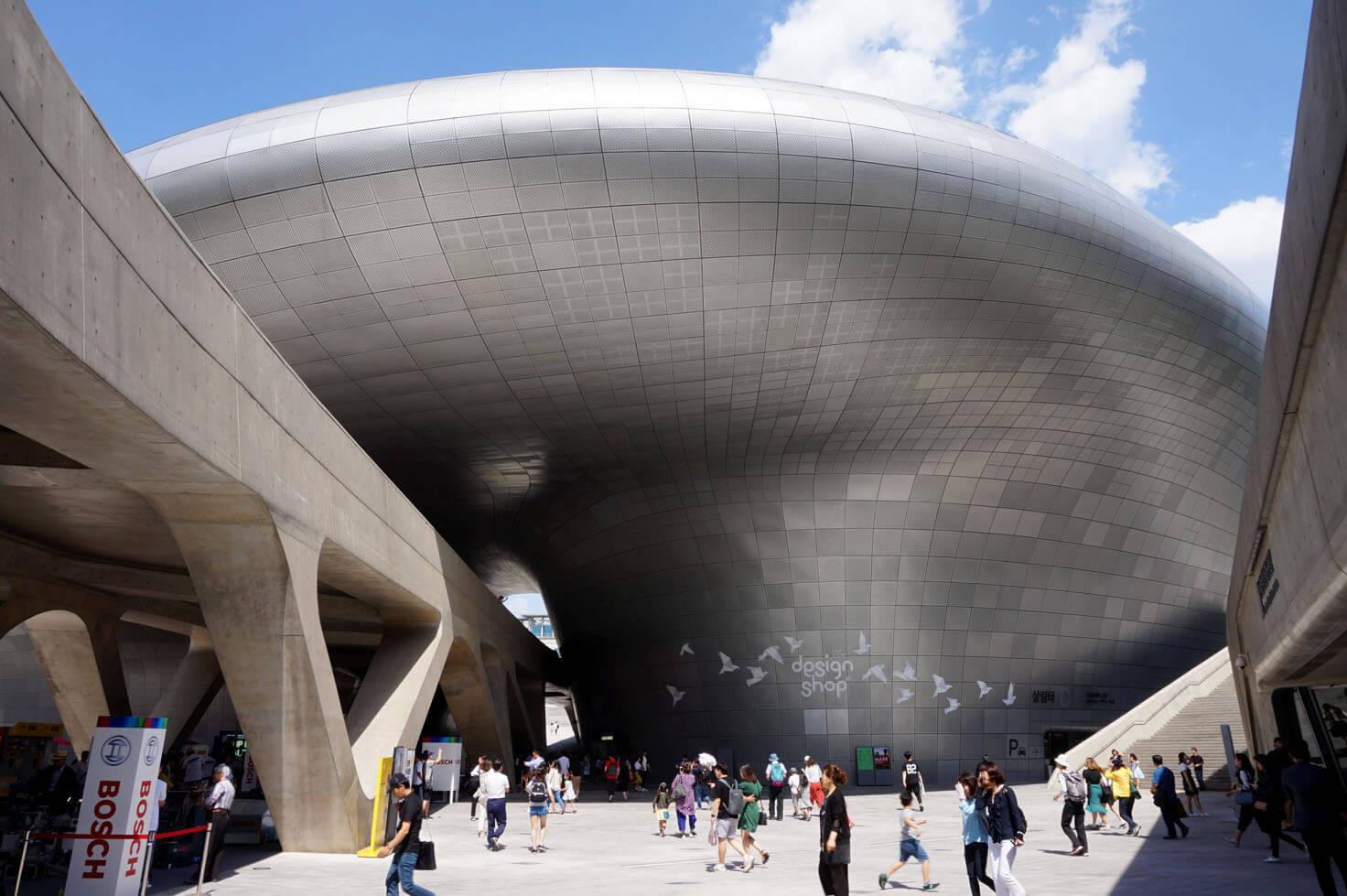
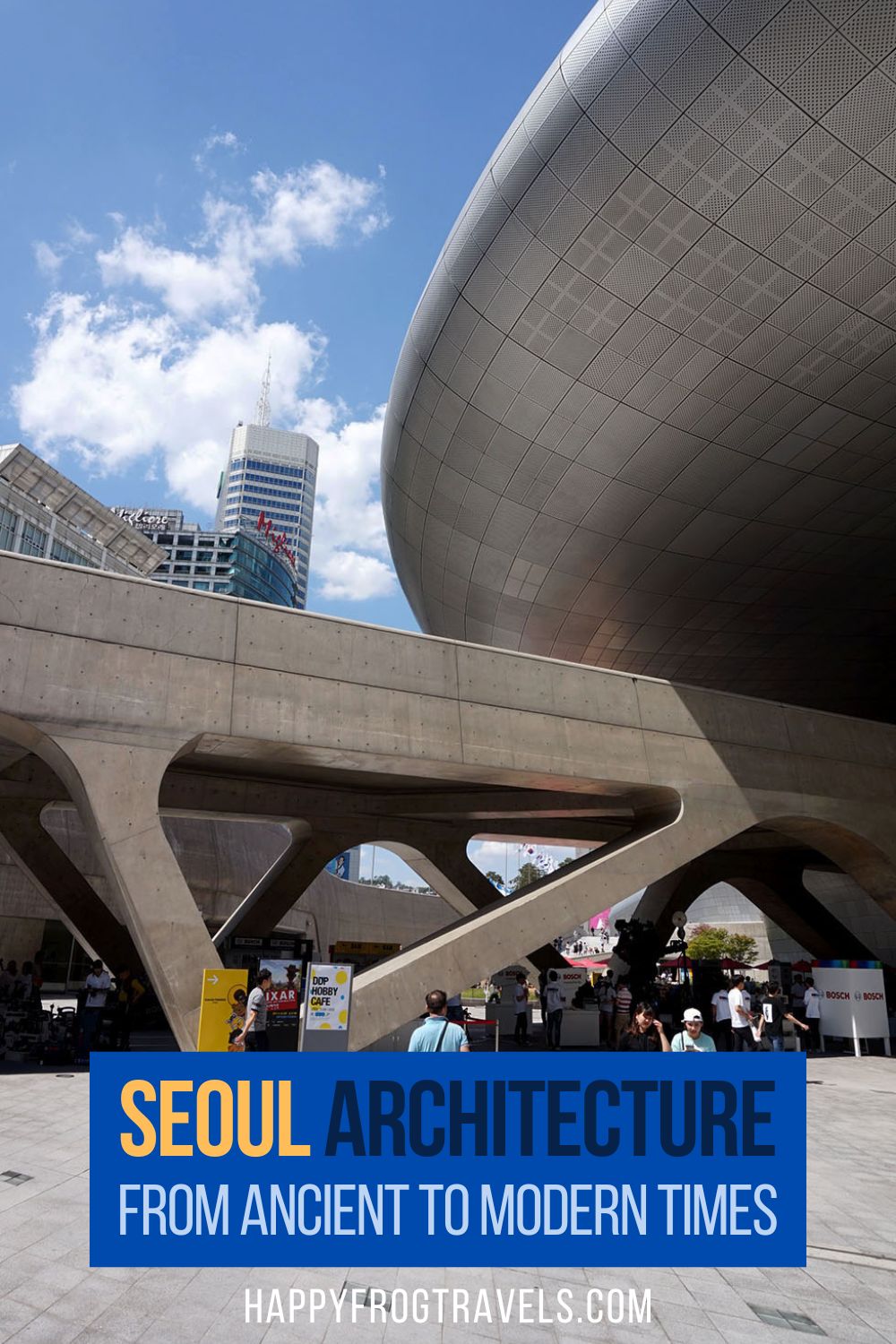
Even more interesting is the Dongdaemun Design Plaza built in 2014 by Zaha Hadid. Its elegantly fluid shape houses many exhibition halls and includes several squares, parks and underground spaces.
The curvy façade is made up of tens of thousands of uniquely shaped panels. The structure beneath it is a combination of reinforced concrete and steel. Several archaeological remains have been incorporated into the building.
In recent years, it has become so popular that it feels like the whole Seoul is there! For a fantastic view of this masterpiece, go to the shopping center across the street and take the transparent lift.
Leeum Museum of Art
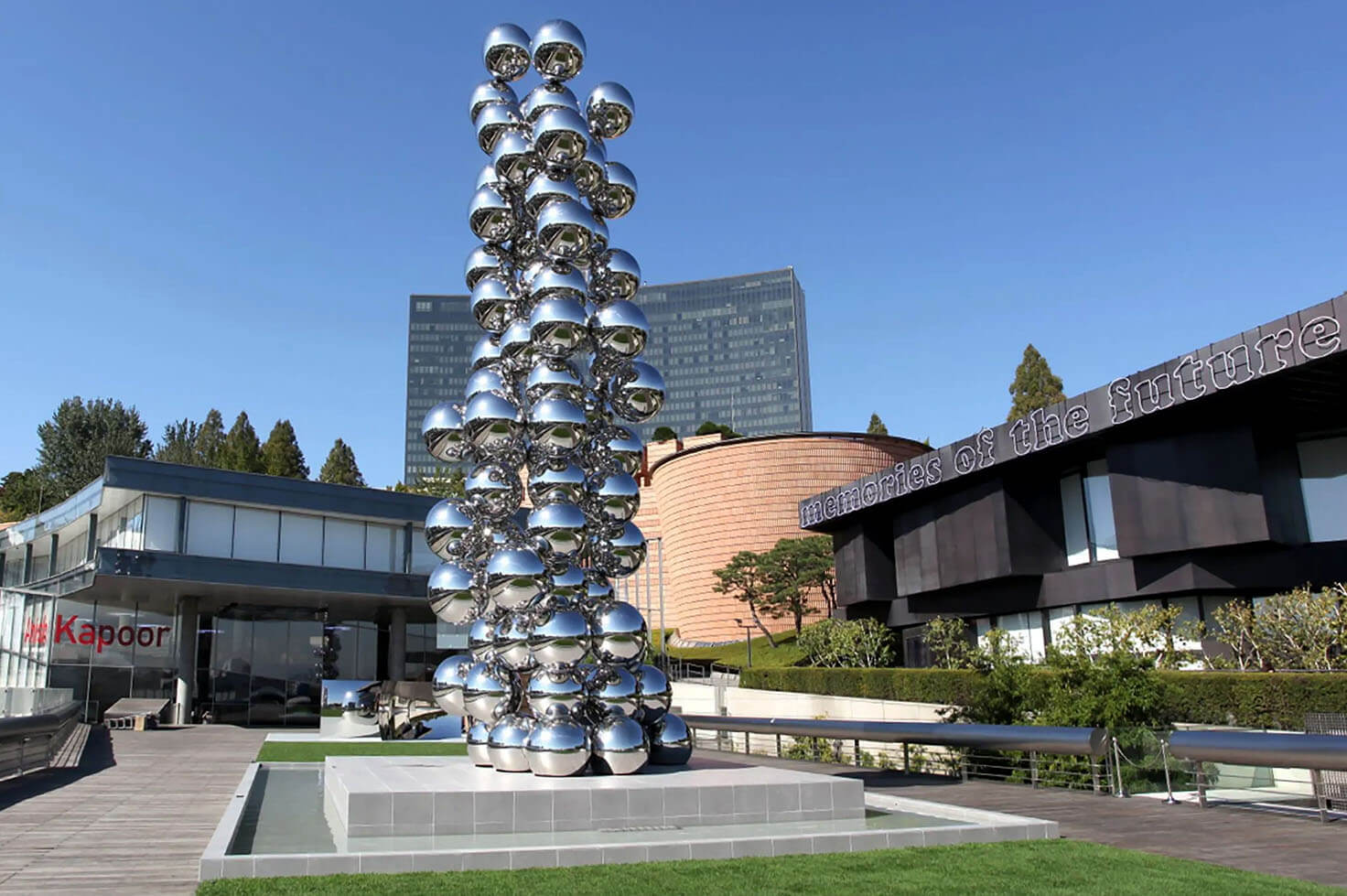
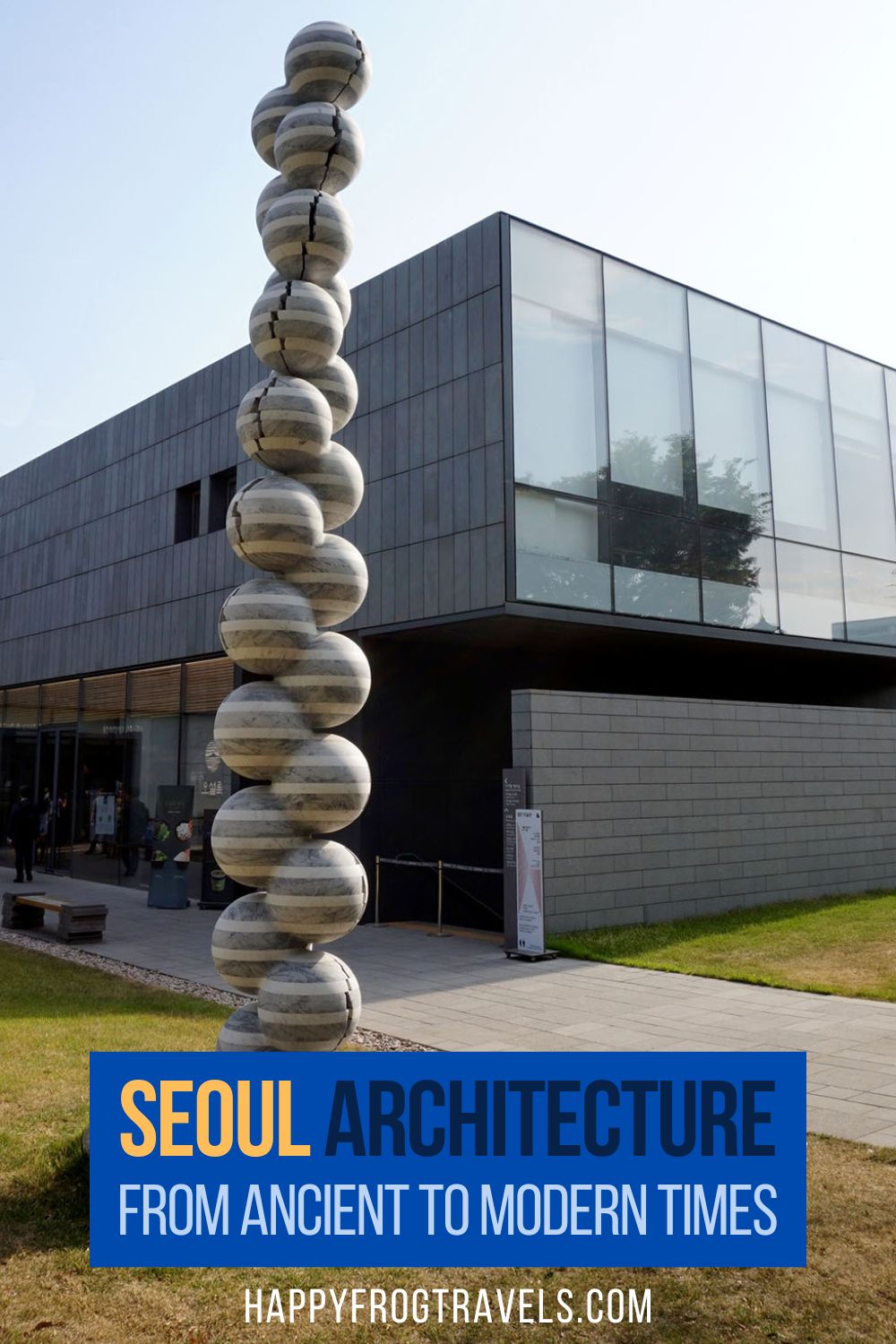
This is our favorite building in Seoul. In fact, the Leeum Museum of Art is a complex of three buildings designed by three world-renowned architects.
Mario Botta designed Museum 1, which houses traditional Korean art. Its round shape, made of brick and stone, almost makes it feel like a temple.
Jean Nouvel designed Museum 2, which hosts modern and contemporary art. The building is more understated, with dark metallic surfaces and a glass façade.
Finally, building 3, which houses the Education and Culture Center, is the work of Rem Koolhaas. It is a light glass structure raised on pilotis.
MMCA Museum of Modern and Contemporary Art
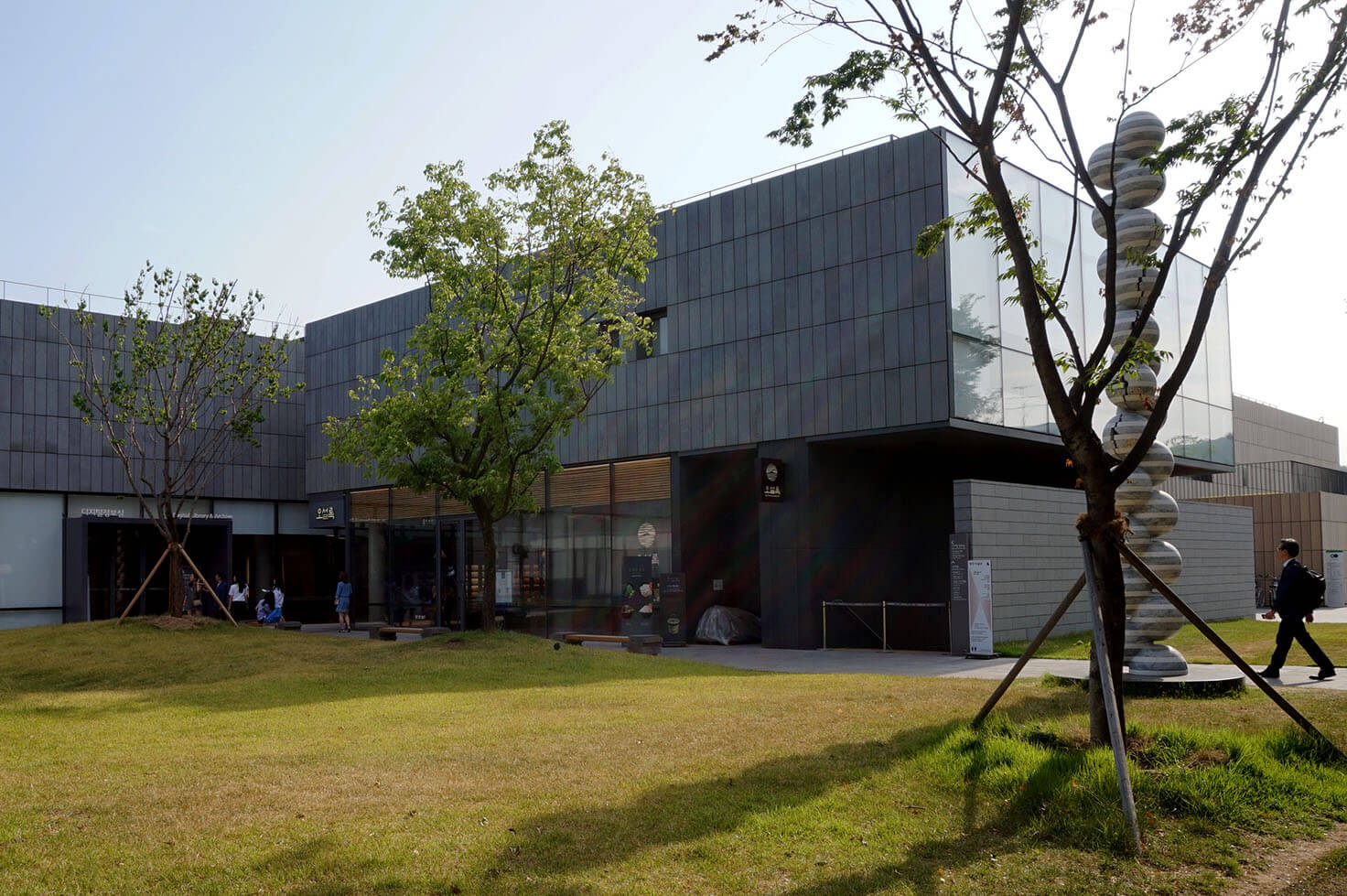
This is another example of old and new coming together. The Seoul branch of the Museum of Modern and Contemporary Art consists of the former Defense Security Command building, several royal relics from the Joseon Dynasty, and a completely new structure completed in 2013.
Unlike Seoul City Hall, where the contrast is more pronounced, here the contemporary architecture interacts more subtly with the historic structures. The new building features simple geometric forms and uses materials such as glass and granite panels.
The project’s greatest achievement is its integration into the landscape. The interior and exterior flow into one another, allowing the old and new to blend seamlessly.
Lotte World Tower
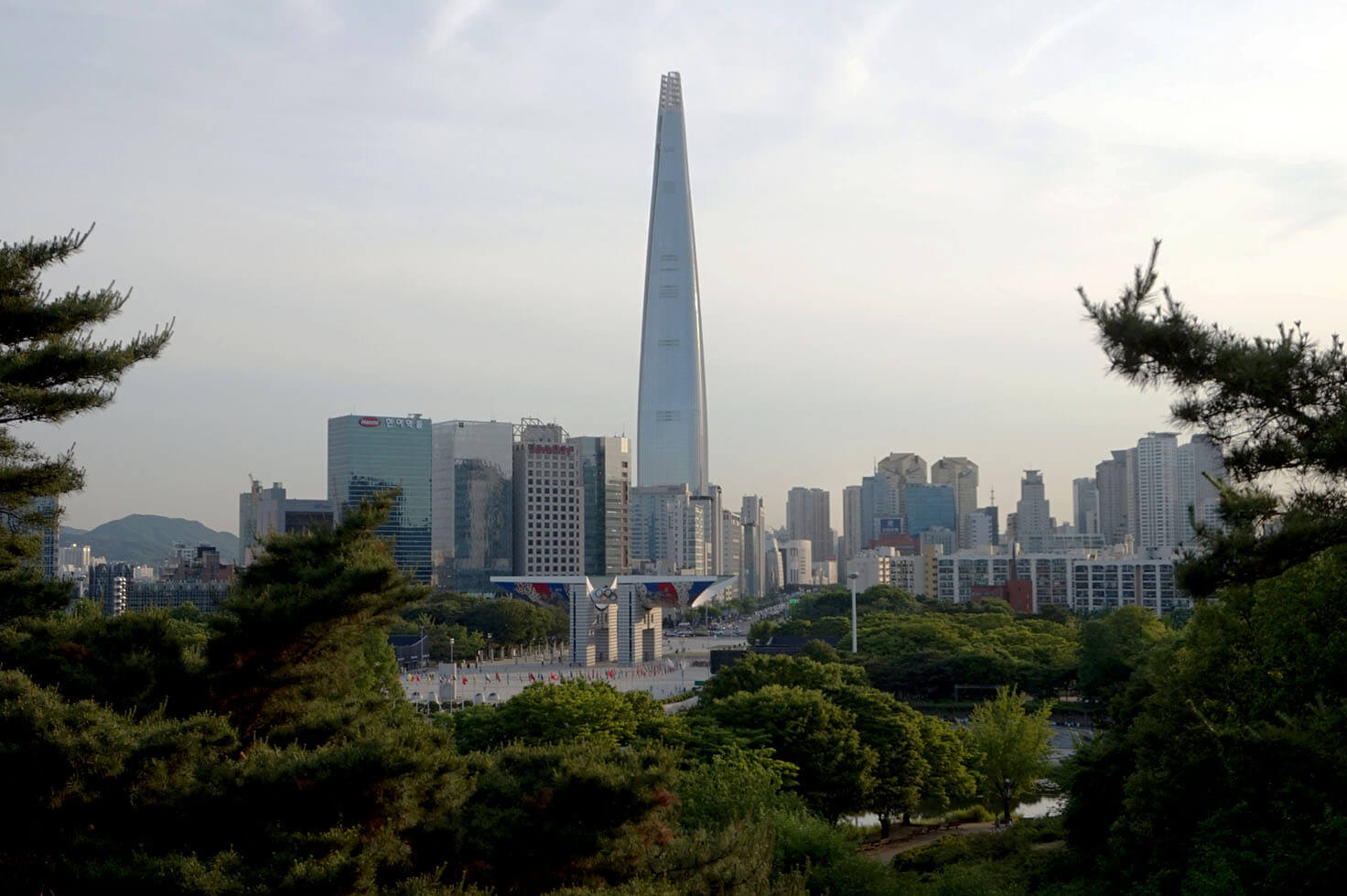
The last contemporary building on our list may not be the most exciting in terms of design. However, it is the tallest building in Korea and one of the tallest in the world.
The Lotte World Tower was designed by the architecture firm Kohn Pedersen Fox and completed in 2017 after seven years of construction. Its simple, elegant form was inspired by traditional Korean ceramics, and the top of the tower resembles a lantern.
What truly sets this building apart is its innovative structure. A reinforced concrete core supports the massive tower without the need for interior columns, and it is engineered to withstand strong winds and earthquakes.
Urban Design
Cheonggyecheon
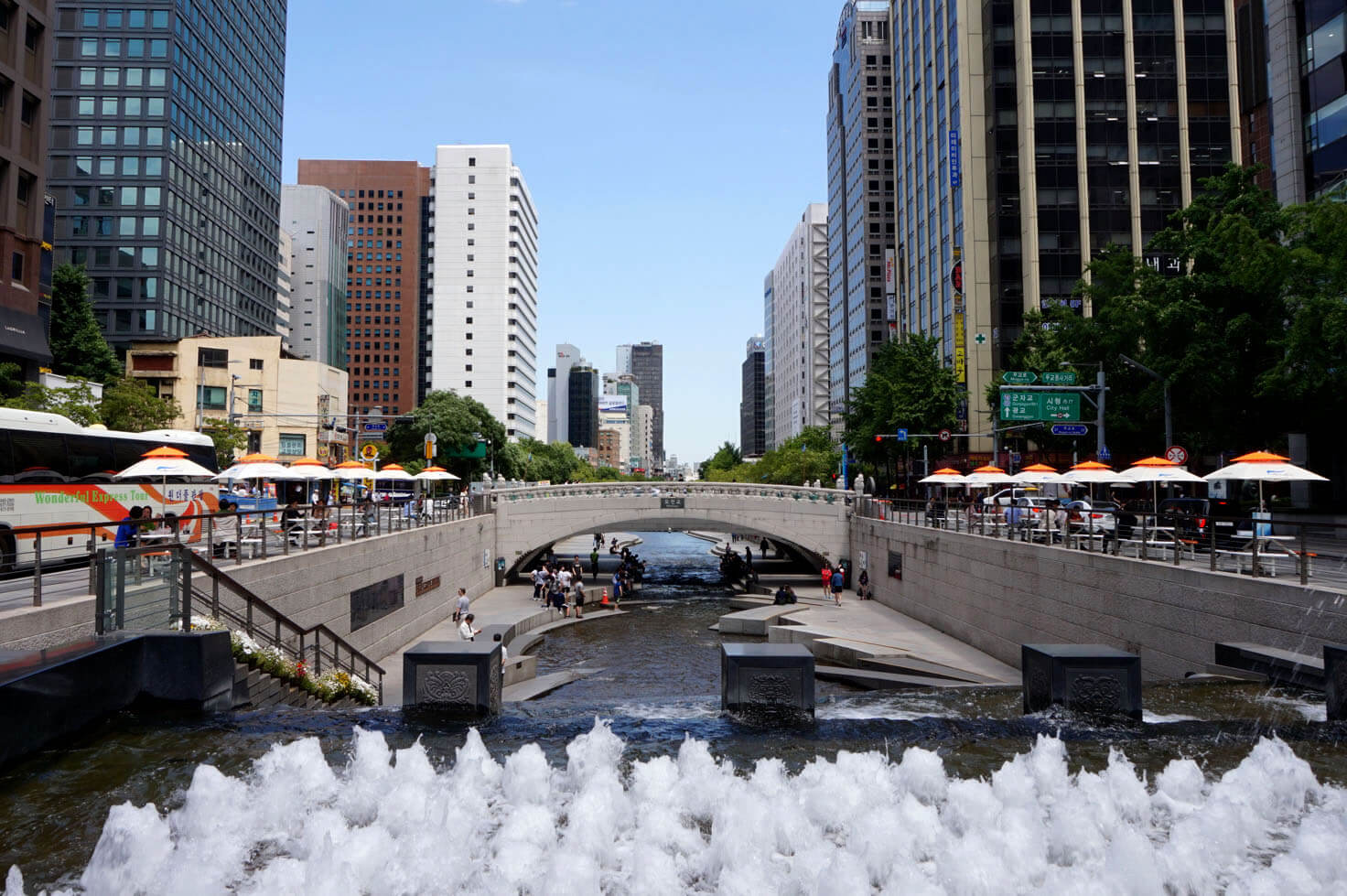
Just like many other cities around the globe Seoul seemed to run away from nature. In 1968 an elevated highway was built over the centrally located 8,4 km (5-mile) long Cheonggyecheon creek.
But the times are changing and in the past decades Seoul’s citizens pressured authorities to open new public spaces. Thus in 2005 a 10,9 km (7-mile) long public space around the creek was opened including a lavish green area, little squares and fountains.
The place has been so successful that the whole city comes here to enjoy it. What we liked most was how varied each section is, with different levels, pedestrian paths, and diverse vegetation.
Seoullo 7017
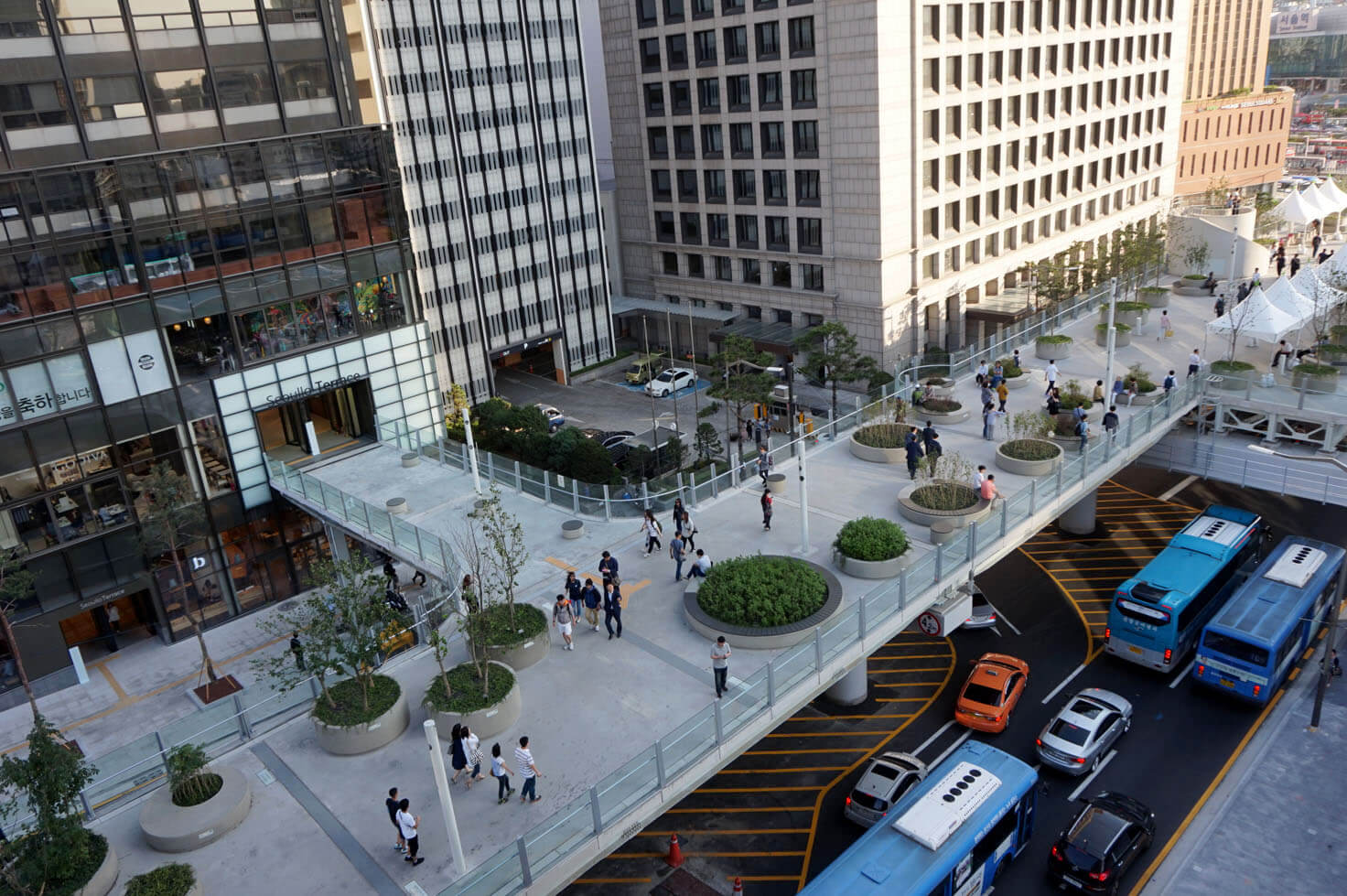
In 2017, just before our visit they opened another fascinating public space: Seoullo 7017. It is essentially a pedestrian path over-passing the railway corridor.
The place is quite innovative: it includes green areas, fountains, showrooms, educational space, open air exhibitions, an info center and a café.
We stayed at the super cool Manu Hotel, towering directly above Seoullo 7017. From our room, we could reach the train station without the stress of crossing the street.
Cool Neighborhoods
Bukchon
Seoul’s main charm lies in its numerous neighborhoods. East of the Gyongbokgung Palace and north of Myongdong you’ll find Bukchon, one of Seoul’s coolest neighborhoods.
If you follow the main street Samcheong-ro you’ll find yourself in coffee heaven. Climbing the little streets eastwards takes you to the top of a hill surrounded by traditional Korean houses and overlooking the city.
We are talking about the so-called hanok houses, traditional Korean dwellings with small courtyards. They are made of clay walls within wooden frames and are placed on stone bases.

Ihwa Mural Village
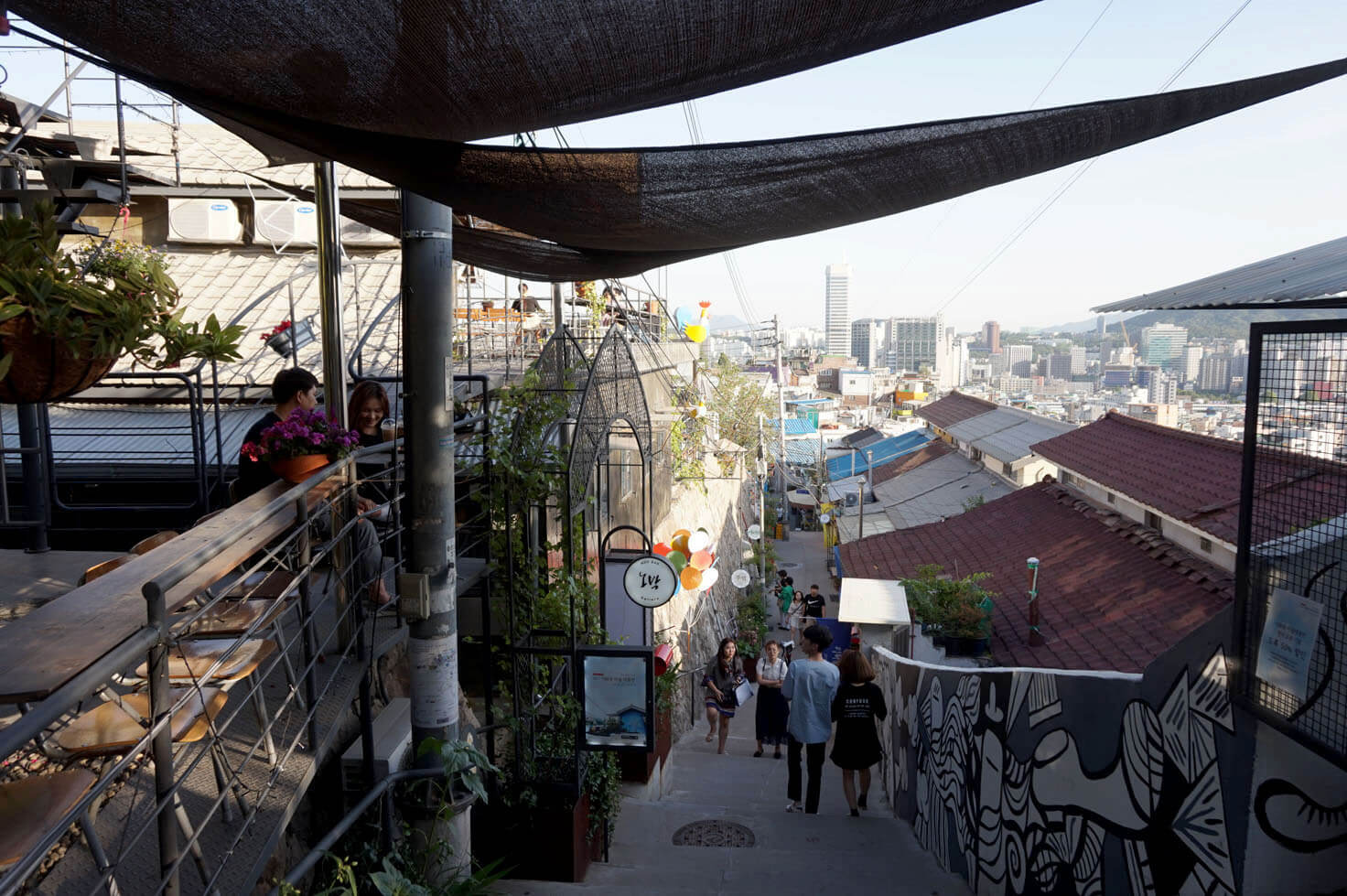
Before we wrap up this article, we want to mention another cool neighborhood. If you follow the city wall up the hill starting from Dongdaemun city gate you’ll end up in Ihwa Mural Village.
Before the mid-2000s, Ihwa was a sleepy area of faceless post-war houses. Today, it’s a colorful neighborhood with narrow, winding streets packed with street art.
Paintings, murals, graffiti, sculptures and again cool cafés are all around, yet it’s somehow intimate. Allow yourself to get lost and soak up its unique atmosphere.
Leave a Reply