


The beautiful heritage town of Vigan is the place to be in the Philippines if you are into historical architecture. Together with two churches in Ilocos, it is a UNESCO World Heritage Site. The city is great, full of crumbling Spanish colonial buildings and alive, inhabited by charming locals who organize events all the time.
Established in the 16th Century, Vigan is the best-preserved example of a Spanish colonial town in Asia, blending perfectly with cultural elements of the Philippines, China and Europe. That’s not all! There are a couple of nice beaches near Vigan too.

How to Get to Vigan
Flying to Laoag Airport
Vigan is not that easily accessible unless you fly to Laoag City, some 50 miles (80 km) north. Laoag City is the capital of the Ilocos Province. There isn’t much to see in Laoag. There are flights from all over the country. However, most tourists come from Manila.
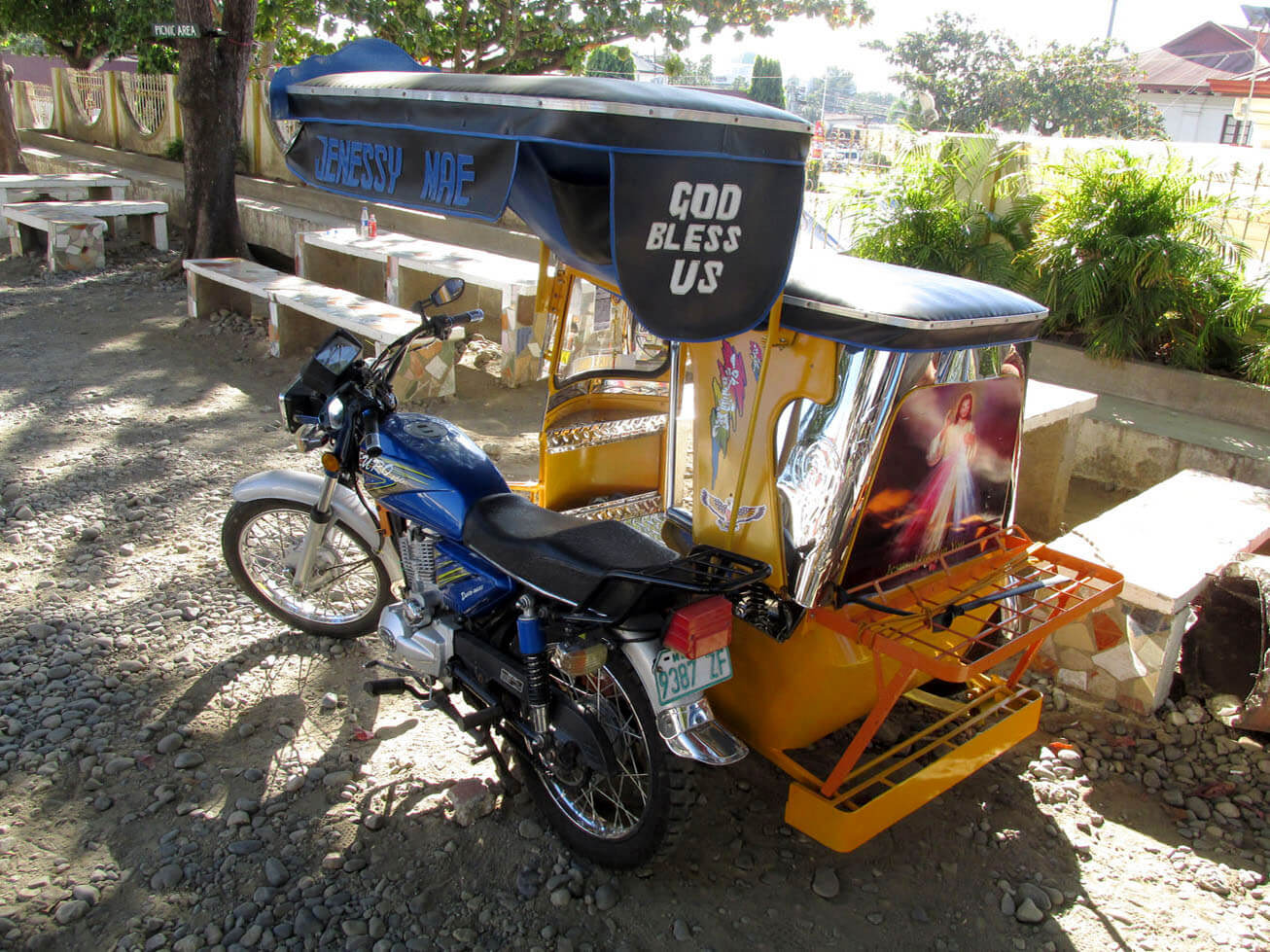
You can arrange transportation to Vigan at the airport. It’s a 1.5-hour drive, so a taxi shouldn’t charge much. Talk to fellow tourists and share the ride. You can also take a public bus from Laoag City to Vigan. The journey takes approximately 2 hours. Taxis can take you from the airport to the bus station in the city.
Buses from Manila
Vigan is some 250 miles (400 km) from Manila. Driving from one place to the other takes approximately 6.5 hours. It’s a lovely ride through the middle of the island and then along the coast. Fortunately, there are frequent buses that link both places all day long and at night.
Depending on the bus you take, the trip takes between 11.5 to 16 hours. Night buses take longer. The fastest buses leave from the Araneta Center – Cubao Station. You can take the LRT Line 2 to the station. Vigan’s bus station is in the center.
Check out this guide on how to get to Vigan from Manila.
Buses from Banaue
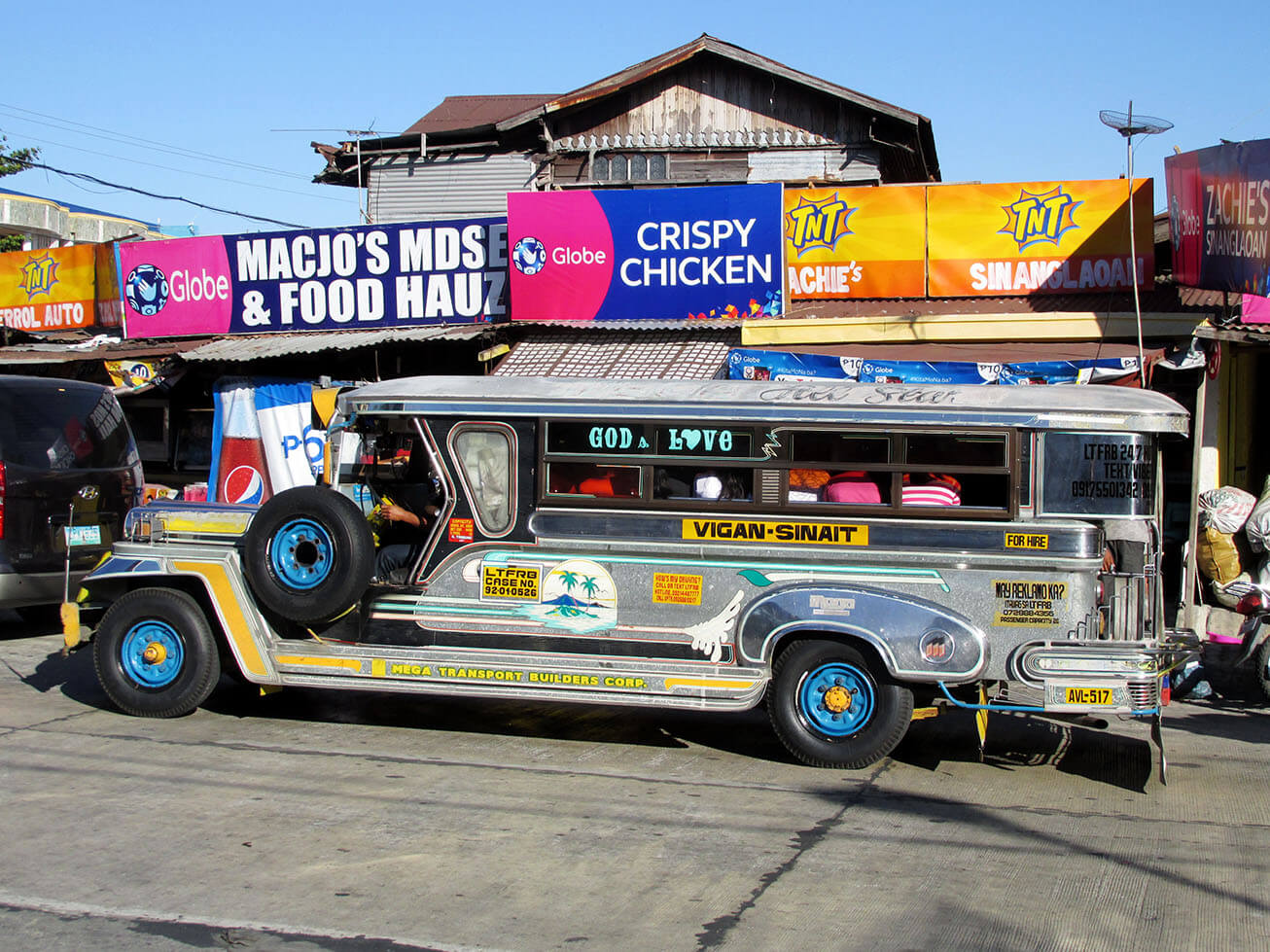
We had to take four different vehicles to get there from gorgeous Banaue. First we took a local bus carrying passengers, furniture, goods, luggage and live chickens. Then we took three different vans, going up and down curvy roads.
It was strange to be puking while enjoying such outstanding views! After 8 hours we reached the coastal town of Santiago, 25 miles (40 km) south of Vigan where we spent a night, woke up, dipped into the sea and continued to the city. Take note that you can take a direct bus from Manila, but the journey takes between 7 and 10 hours.

Colonial Vigan
Vigan is home to the largest number of Spanish colonial residential buildings in the Philippines. Originally located on an island, Vigan was an important trading post even before the Spanish arrived. In 1572 the Spanish conquistador Juan Salcedo arrived here and renamed the city to Villa Fernandina de Vigan. Vigan remained under Spanish rule for more than 300 years.
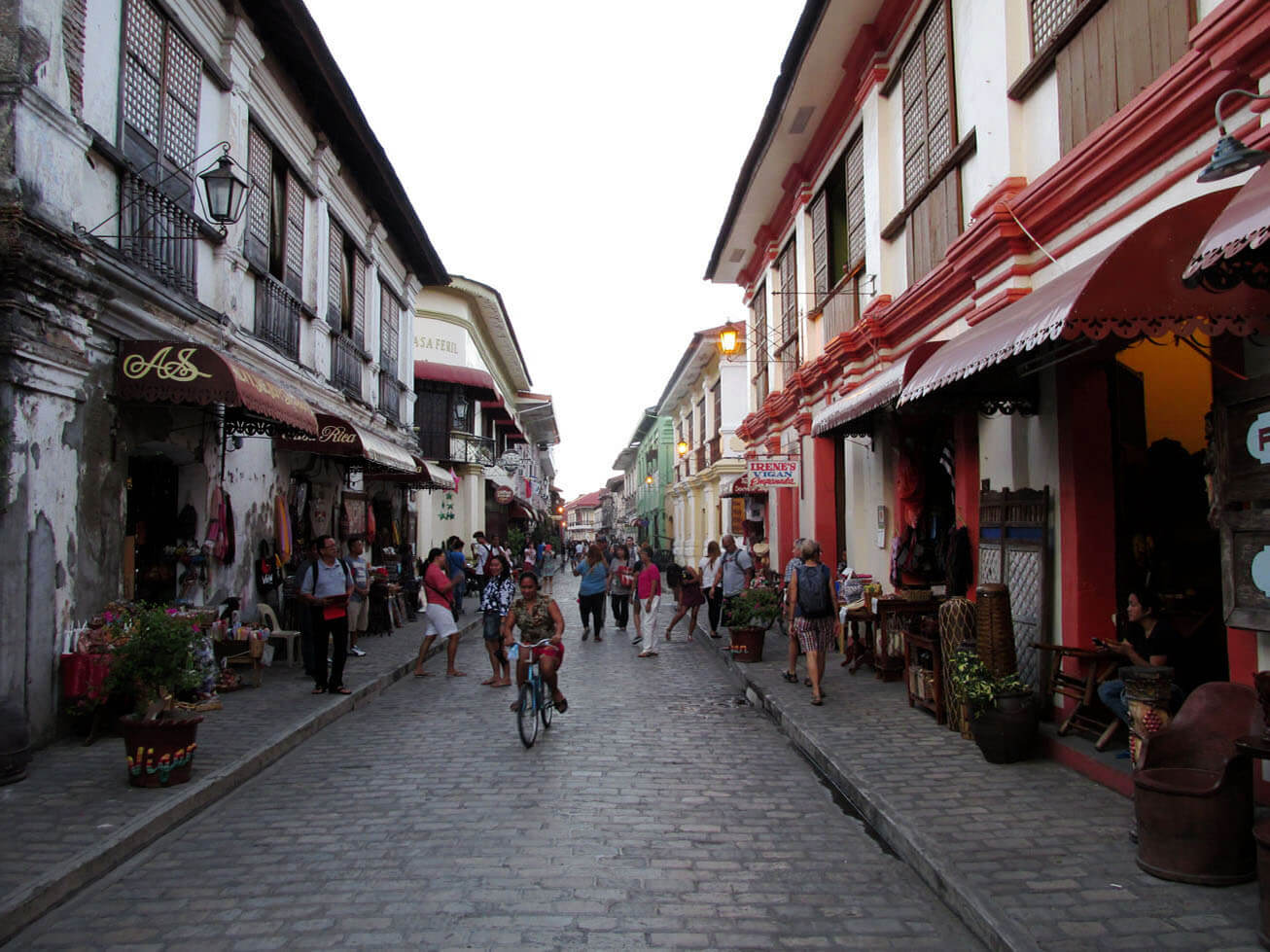
Hence the beautiful historic architecture that dots the colonial town of Vigan. Crisologo is its nicest street. Closed to traffic, it is where most of the action happens. Some of the houses are currently museums, including the Syquia Mansion, the Father Burgos House, the Crisologo Museum and the Arce Mansion.
Places to Visit in Vigan
Vigan’s most famous attractions are in the historical core. You have to visit the Crisologo Museum. The historic house used to be the home of the governor. Another museum you can’t miss is Padre Burgos House. It’s a great place to learn about the local history. The Philippines National Museum is next door.
It’s a massive house dedicated to Ilocos culture and history. The place is beautiful, and the collection inside is pretty comprehensive. A block east is the Museo Nuevo Segovia, the smallest museum in the city. The Archbishop’s Palace is next door. Walk south to the Syquia Mansion Museum.

Churches in Ilocos Sur
Vigan Cathedral
Between the two popular squares Plaza Salcedo and Plaza Burgos St. Paul’s Metropolitan Cathedral displays both Spanish and Asian influences. Juan Salcedo himself ordered the first temporary church to be built, making it the first parish in Northern Luzon. However, the first permanent church was erected in 1641 and suffered severe damage over the years.
The one we see today replaced it in 1800. The Earthquake Baroque cathedral incorporates Neo-Gothic, Romanesque, and Chinese influences. We kid you not! Philippine churches built to withstand earthquakes are called Earthquake Baroque. You will notice that these are usually lower and wider.

Bantay Church
Within walking distance, though administratively not part of Vigan City, the Bell Tower of Bantay Church is the oldest structure in the region. The Bantay Church, also known as Saint Augustine Parish Church or Shrine of Our Lady of Charity, is famous due to the miraculous image of the Virgin Mary as Our Lady of Charity inside.
The church did not escape the perils of World War II, so in 1950 it was reconstructed in Neo-Gothic and Pseudo-Romanesque styles. It is a modern reinterpretation of Spanish architecture. Its oldest part, the belfry, used to be a watchtower for pirates during the colonial era and enemy forces during the war.

Paoay Church
After 3 wonderful days in Vigan we took a bus to Laoag City and got off at the picturesque Paoay village where we spent half a day around the impressive 17th Century Saint Augustine Church. The church is another great example of Spanish colonial baroque architecture adapted to local seismic conditions.
Completed in 1710, the church combines Gothic, Baroque end Oriental influences. Look for the Gothic and Chinese elements on its façade and the Borobudur influences in the niches. However, its most distinguishing feature is the 24 enormous side buttresses that can withstand even major earthquakes.

Laoag Cathedral
Before taking our flight to Manila we spent some time in Laoag itself, which wasn’t anything special except for the Saint William Cathedral and its sinking tower. Augustinian friars built the church in 1612. It is currently the seat of the Roman Catholic Diocese of Laoag. Throughout its turbulent history, revolutionaries and American forces occupied the church.
The church architecture belongs to the so-called Italian Renaissance style. Two pairs of pillars on each side support its unique two-story facade. Since the adjacent sinking bell tower has survived many earthquakes, it is considered an Earthquake Baroque structure.

Santa Maria Church
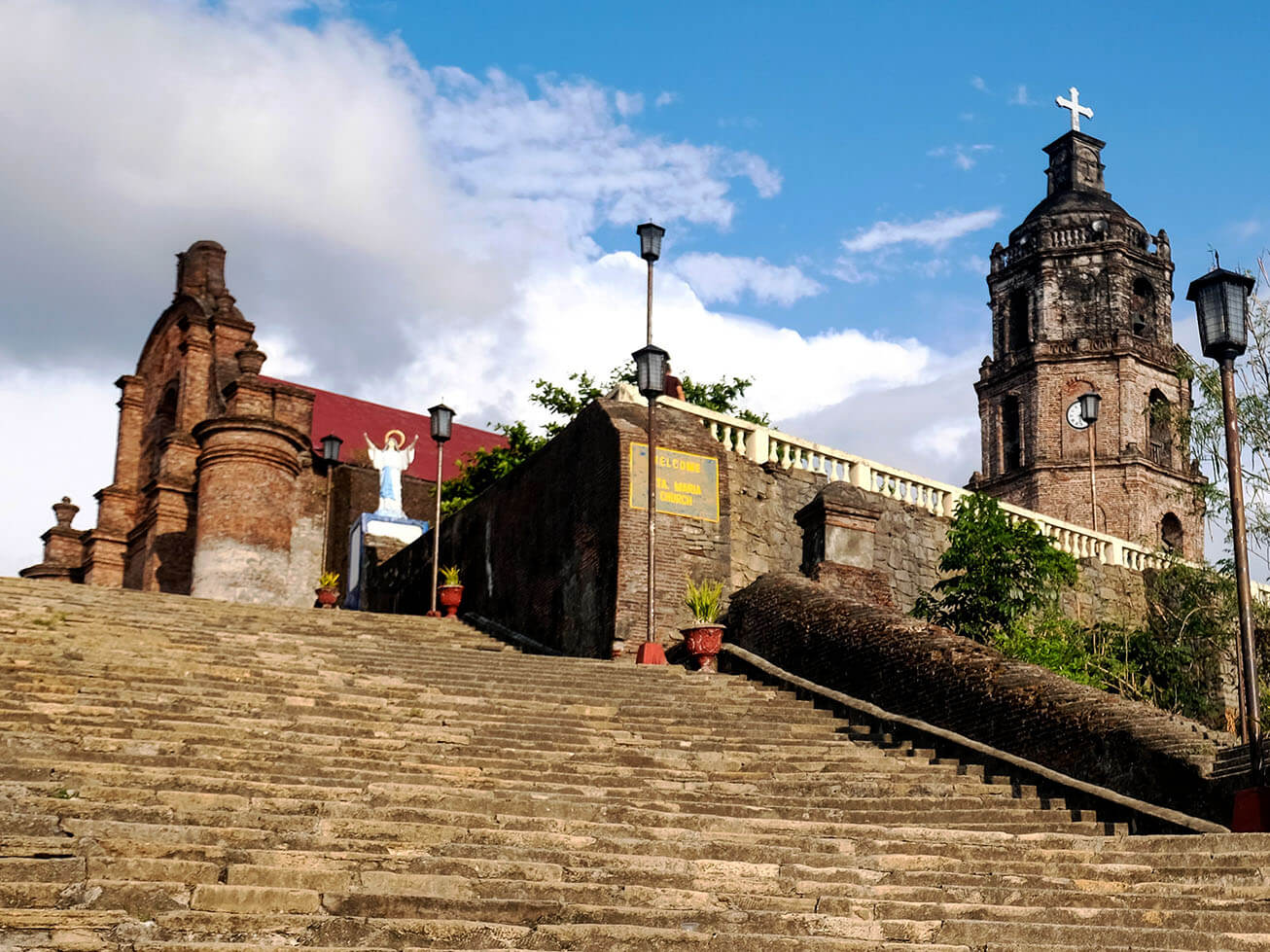
One of the most important historical churches in Ilocos, Santa Maria Church, is south of Vigan. Together with Paoay Church and two other Philippine churches they make the Unesco World Heritage Site called the Baroque Churches of the Philippines.
According to a local legend, before there was any church, the Virgin Mary would appear and disappear at different places. A guava tree was one of her favorite places, so the present church was built there. Unlike other churches in Vigan and the Philippines, it is not located on a square, but rather on a hill surrounded by a fortress.
How to Visit Vigan and the Churches of Ilocos
As mentioned above, flying to Laoag Airport is the easiest way of reaching Vigan. From Laoag take a jeepney to Vigan but stop in Batac City. From there, take a taxi or a tricycle to the Paoay Church. Go back to Batac and take another jeepney to Vigan.
In Vigan, you can visit both the Cathedral and the Bantay Church on foot. They are within reasonable walking distance from the colonial neighborhood. To visit the Santa Maria Church, take any jeepney going south of Vigan end hop of at the Santa Maria town. The church is just minutes away from the main road.

Beaches near Vigan
Beaches near Vigan are not the most well known in the Philippines. Isn’t that great? Hence, you can enjoy yourself without massive tourism. If you are short of time, head over to Mindoro or Fuerte Beaches. Since both are the closest beaches near Vigan, some locals consider them city beaches.
We went to the gorgeous Sabangan Beach in Santiago and stayed at the Vitalis White Sands. Another great option on Santiago beach is the Santiago Cove Hotel. Finally, Currimao is a gorgeous beach between Vigan and Laoag. You can stay directly on the beach, in the Playa Tropical resort.

Where to Stay in Vigan
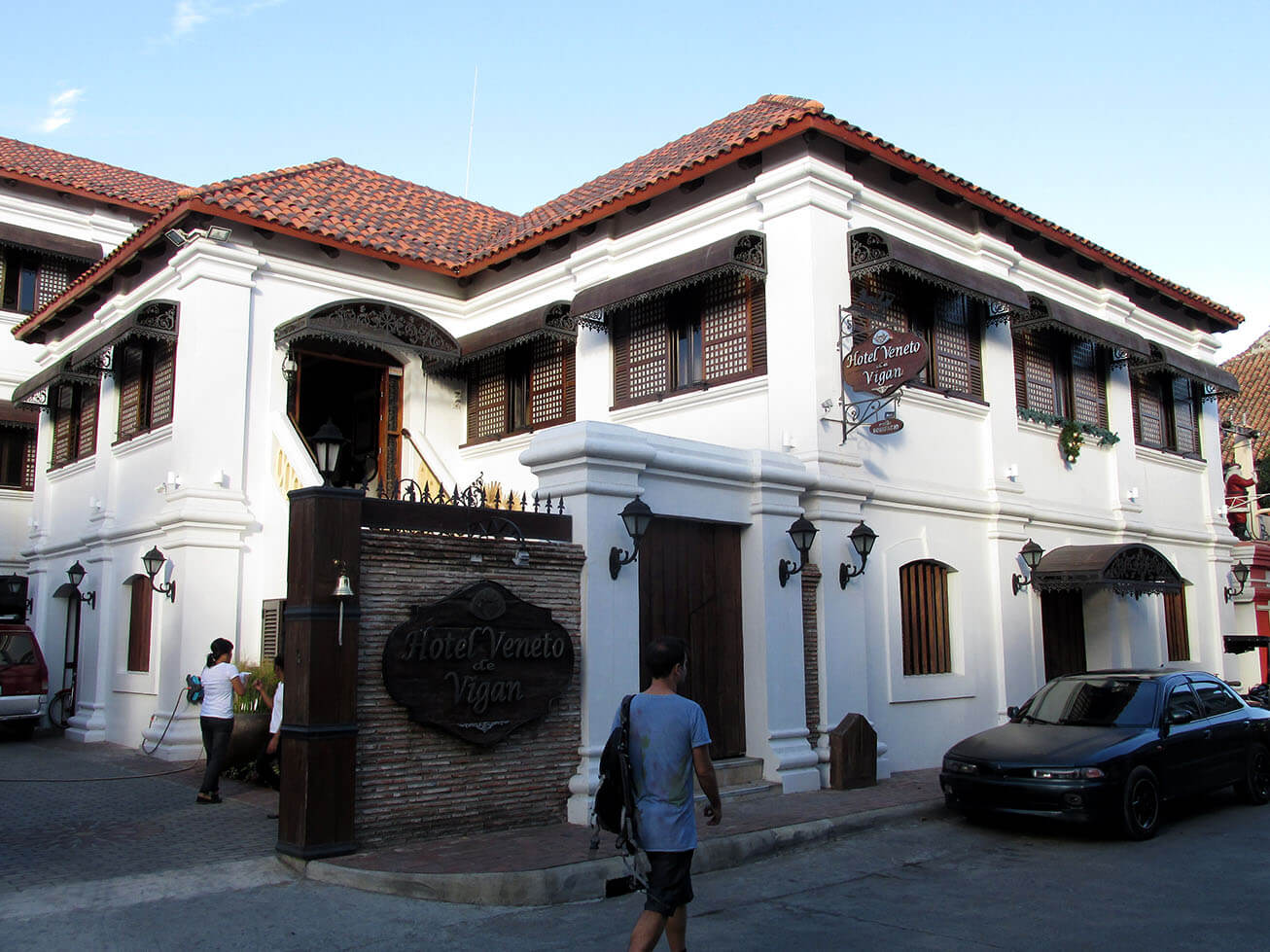
In Vigan, we stayed at the wonderful Ciudad Fernandina Hotel. The house goes back to 1758 and has been part of Vigan’s history ever since. They did a splendid job refurbishing the building. Another great option in the core of the historical center is the Hotel Veneto De Vigan. Their comfortable rooms overlook the cobbled streets and the patio.
If you are looking for something a little bit fancier, stay at the Luna Hotel. The elegant hotel, located inside the historic area of Vigan, is the only museum hotel in the Philippines. Thus you get to stay in a nice house and see some rare and vintage art.
Food and Coffee
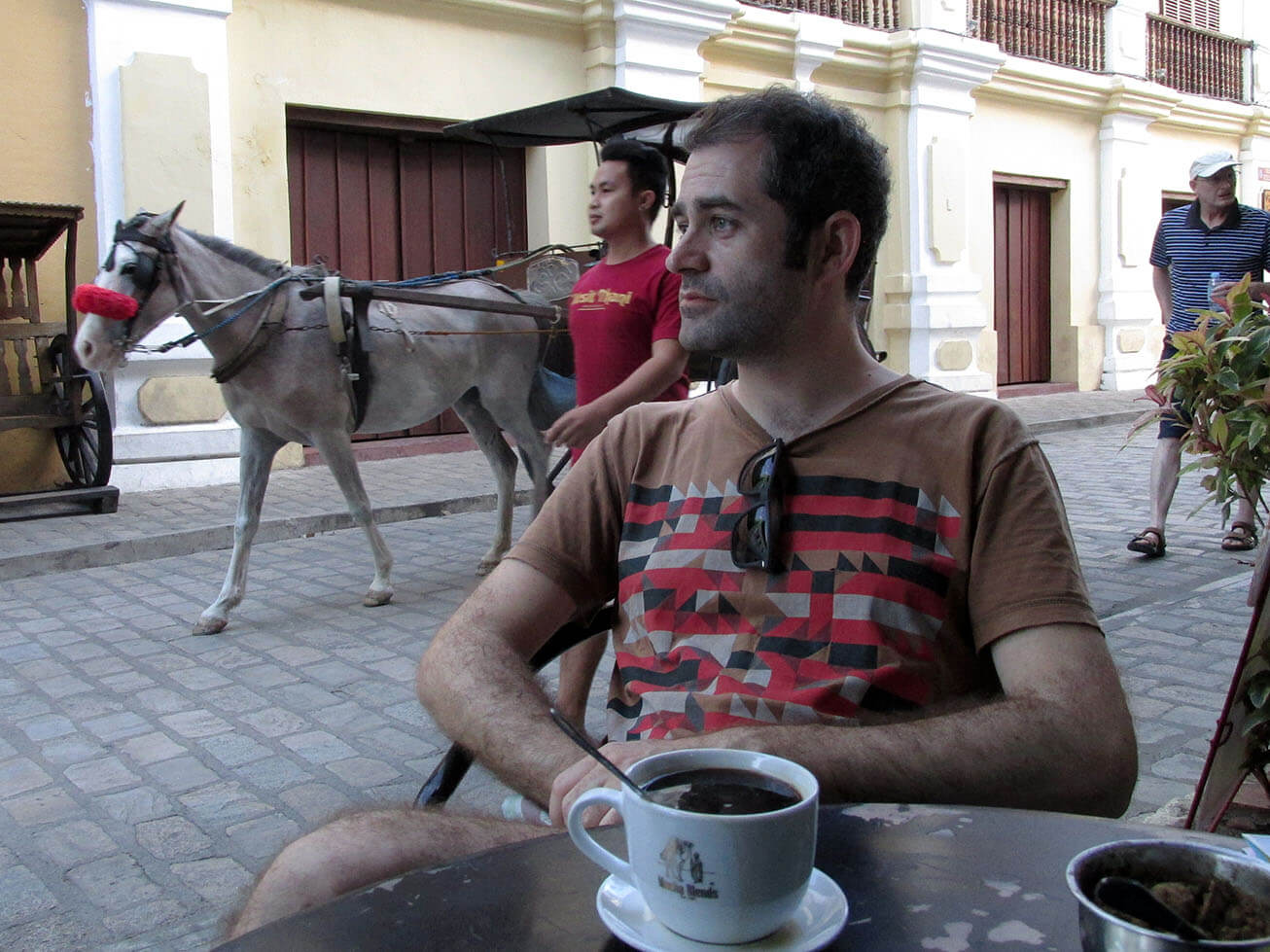
Vigan is one of the best places in the country to try local cuisine. Though the city is small, it is pretty touristic, so establishments do their best to get customers. We asked at our hotel and in the regional tourist office for the best restaurant in town, and both agreed it is Café Leona.
Located at the beginning of Crisologo Street right next to the tourist office, it offers an extensive menu including Filipino, Japanese, and Italian cuisine. Here you can try local longganisa and bagnet. Our favorites were charcoal dishes with rice and vegetables. If you want to try the famous Ilocos empanadas, go to Irene’s Empanada.
Vigan is a City of Events
Locals are proud of their city and its status as one of the world’s wonders (according to them, we couldn’t confirm it). Vigan is indeed very different from any other city in the Philippines. Apart from the beautiful architecture, numerous events take place year round.
We witnessed the parade of Miss Luzon, gorgeous girls walking all day long with their huge heels, and had the pleasure of talking to some of the friendly contestants. One night we saw a crazy fountain show with locals screaming and singing to popular songs. After the show, we enjoyed some pretty wild fireworks with ashes falling from the sky.

Filipinos
Filipinos are probably the nicest people on earth. In Vigan we met so many people and had long and fun conversations. We took pictures with half of the town, and made cute kids laugh. We chatted with the employees of our hotel, with waiters at restaurants and cafes, and even with people on the street.
Everybody was happy to share their stories with us! Actually, if there was one thing I remember from this beautiful country, it’s the constant laughter. There is a Filipino restaurant near our home in Barcelona and whenever I pass next to it I begin to smile. I guess I’ll eventually have to go back to the Philippines.




Leave a Reply