


We traveled to Stockholm to attend the famous TBEX Travel Conference. That proved to be a great idea! Advertised as Scandinavia’s capital, it is arguably its nicest city. Indeed, Stockholm hosts beautiful historic architecture, charming neighborhoods and hidden viewpoints.
The medieval district Gamla Stan is in the small, centrally located island. To the north, the modern city center wraps around a soberly refurbished area from the 60s. Quite different to the latter, elegant palaces line the coastal area, creating an imposing waterfront.
Unlike the historic, modern and contemporary architecture is quite modest with few notable exceptions. Luckily, Stockholm is much more than that. The city itself lies on 14 of the more than 24,000 islands that make up the truly unique and splendid Stockholm archipelago.

Stockholm Cathedral (Storkyrkan)
1279
The Stockholm Cathedral or Storkyrkan is the city’s oldest church and the seat of the Lutheran bishop of Stockholm. Built in 1279 in the so-called Swedish brick gothic style, it originally served as a Catholic church.
In 1527 it became a Lutheran protestant church. Though its exterior is relatively sober, its interior hides some true gems, including outstanding religious sculptures. Among them, the most valuable one is the wooden statue of Saint George and the Dragon.
Many important events in Swedish royal history took place in the cathedral, such as royal weddings, coronations, and funerals.

Riddarholmen Church
Around 1300
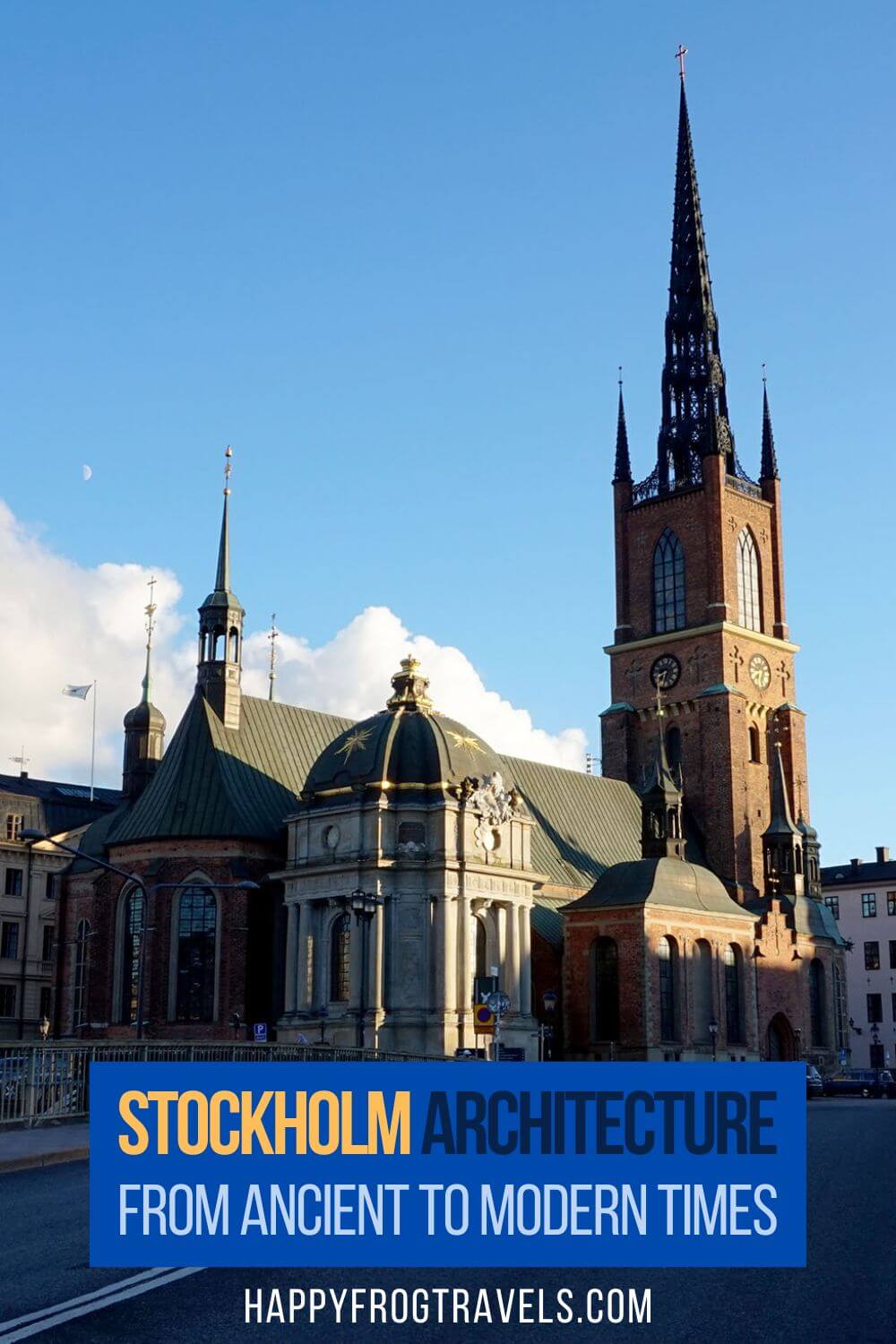
Another very old building is the impressive Riddarholmen Church, on tiny Riddarholmen Island. Though its construction date isn’t clear, it is Stockholm’s oldest abbey.
A large spire built after the protestant revolution in the 16th century burnt down in 1835. The current one, made in cast iron, replaced it. It used to be a parish church until 1807 when the congregation dissolved. Since then, only burials and commemorations take place.
It is the resting place of all Swedish monarchs that died between 1632 and 1950, except Queen Christina. During summer, the church opens as a museum.

Royal Palace
1760
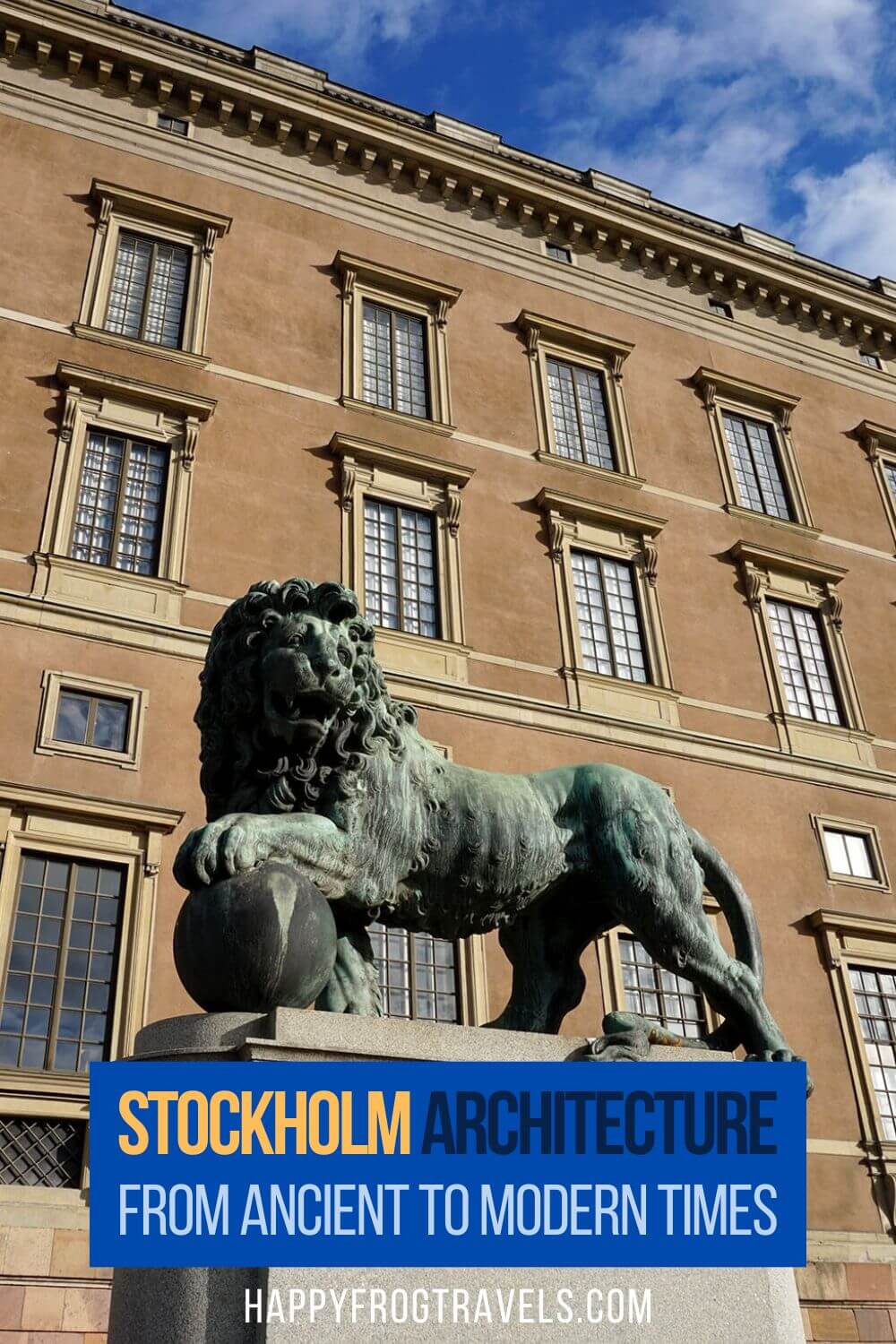
The Royal Palace of Stockholm is the official residence of the Swedish King. With over 600 rooms, it is one of the largest palaces in the world.
The palace stands on the northern tip of Stadsholmen Island, on the grounds of the medieval Tre Kronor Castle that burned down in 1697. The current building is from the 18th century and is a typical example of Italian Baroque. Its architect Carl Hårleman also designed the interiors, but in a Rococo style.
The palace is open to visitors. Thus, you can visit its five museums, the Hall of State, and the Halls of the Orders of Chivalry.

Biological Museum
1893
The Biological Museum of Stockholm on Djurgården Island is dedicated to Scandinavian wildlife. Built in 1893 by architect Agnes Magnell, it is one of the best examples of National Romanticism in Sweden.
The museum’s building evokes a traditional Norwegian stave church from the 12th or 13th century. It is a wooden structure that fits perfectly into the nearby open-air Skansen museum.
The interior is quite unusual: a single-nave, cathedral-like space with exposed beams and roof windows that fill it with natural light.

Royal Dramatic Theater
1908
Another building you should visit is the lovely Royal Dramatic Theater. King Gustav III founded the theater in 1788 and separated it from the National Opera.
Originally, it shared the same space with opera. Later on, it moved to the Arsenalen Palace, which burned down in 1825. It was only in 1908 that the theater moved to its current location. Architect Fredrik Lilljekvist designed an art nouveau palace inspired by Viennese Secession.
Its numerous decorative elements like façade reliefs, sculptures, lamps, and the furniture make it one of Sweden’s most lavishly decorated buildings.

City Hall (Stadshuset)
1923
Our favorite building in all of Stockholm is the impressive City Hall. Dating back to the beginning of the 20th century, it is another great example of Swedish national romanticism.
A 106-meter-tall spire bearing three crowns, the Swedish national symbol, distinguishes the large red brick building. The building’s most famous room, the blue hall, hosts the Noble Prize banquet dinner. Scandinavia’s largest organ is here.
After dinner, guests move to the marvelously decorated Golden Hall to dance. It owes its name to the more than 18 million golden ceramic tiles that decorate it. There is also a large green courtyard, Borgargården.

Avicii Arena (Former Ericsson Globe)
1989
A popular place from where you can enjoy Stockholm from above is the famous Avicii Arena. The Arena is the world’s largest spherical building, and its moving viewing platform called SkyView offers 360 degrees views.
We were a bit disappointed by the view. You can barely see any of Stockholm’s historical sites, the sea, or the islands. Since its location is remote, you only see the surrounding area, which we didn’t find appealing.
The sphere is made of a steel space frame and covered with white panels. This unique structure eliminates the need for interior columns, creating a vast large space that is perfect for concerts and other events.

Vasa Museum
1990
The Vasa Museum isn’t famous for its exterior, but rather for its interior. It houses the only preserved 17th-century ship in the world. Unfortunately, in 1628 the warship Vasa sunk on its first voyage.
In 1961, after taking the ship out of the sea, a slow and meticulous restoration process began. Since opening in 1990, the Vasa Museum has become Sweden’s most visited museum. It includes ten different exhibitions about life on the ship. An absolute must for any visitor to Stockholm.
The museum’s building was designed to evoke the shape of the ship. It resembles a giant fortress, with brown brick walls and a black copper roof. You can easily recognize it by the three tall sailing vessels rising from the roof.

Stockholm Waterfront Congress Centre
2011
One of the buildings we experienced firsthand was the Stockholm Waterfront Congress Centre. Most of our events were held here, so we spent quite a lot of time in this remarkable building.
The center is located by the Klara Sjö canal, next to the city’s main train station. Due to its location close to the sea, it is clearly visible from many viewpoints on Gamla Stan and Södermalm.
The architects had the difficult task of competing with the nearby Stockholm City Hall. They responded with a swaying silver surface composed of several volumes. The shiny stainless-steel façade reflects the Nordic sun and the movement of the sea.

Aula Medica
2013
Our favorite contemporary building in Stockholm is the ceremonial auditorium of the Karolinska Institute, known as Aula Medica.
The glass building from 2013 showcases science through its clear geometry and play of light. It has an asymmetrical shape with angles that change depending on the viewpoint.
The star of the building is the wooden auditorium where events are held. Its warm surface contrasts clearly with the cold, sleek exterior.

Stockholm Metro
1950 – today
One of the perks of our travel conference was free tickets to various attractions. Without hesitation, we signed up for a tour of Stockholm’s most iconic metro stations.
The tour was interesting and quite informative; however, we thought it was a bit exaggerated. Yes, some of the stations are very nice, but out of around 100 stations, only a dozen or so feature truly impressive art.
Our favorite stations are those from the 1970s, where you can see the original exposed rock walls. They are sprayed with a thin layer of concrete and covered with large murals. Many stations are designed to represent an important nearby landmark.

Where to Stay in Stockholm
Since Stockholm is a popular tourist destination, there are plenty of hotels in different categories. That said, lower category hotels cost almost as much as 4-star hotels. Thus, these are poor value for money.
We stayed at the wonderful Scandic Wallin in downtown Stockholm, on a lovely square just off Drottninggatan Street. Our modern room was spacious, comfy, and offered great views of the surrounding area.
If you rather stay in a historic palace in front of the sea, we recommend the elegant Hotel Diplomat. This Art Nouveau palace from 1911 offers first-class accommodation and fantastic views.


Leave a Reply