


One of my favourite things in life is to travel to a place yet to be discovered. I selfishly enjoy being alone in a lost monastery, far away beach or a hidden canyon.
Romania is not a completely undiscovered destination, nowadays there are even plenty of organized tours around the country. However, besides its beautiful Transylvanian cities and castles, its crazy capital and mountain resorts, the rest of the country remains relatively unexplored.
Around 300 Fortified Churches all over Transylvania defended Europe from the continuous attacks of the Ottomans and Tatars during centuries. Of the 150 surviving churches, 7 are on UNESCO’s list of World Heritage Sites.
Brief History
The history of fortified churches goes back to the 12th century, when Saxon German settlers came here by order of the Hungarian kings. In order to defend themselves from constant attacks, they built fortifications.
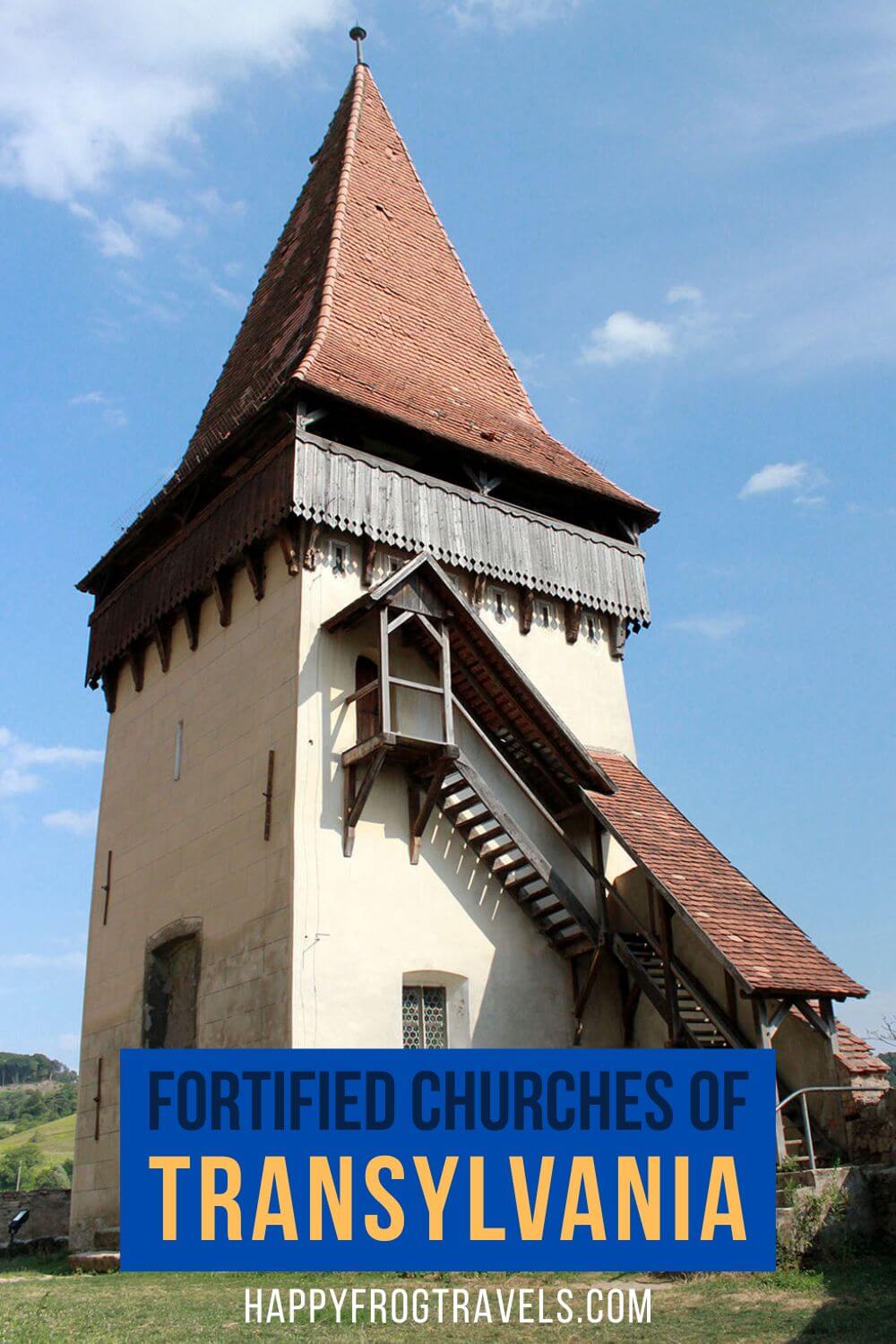
While bigger towns were fully fortified, smaller ones only had walls around their temples. In some cases, even the churches were transformed into defensive structures.
All fortified churches are either Romanesque or Gothic. Many have later additions, often with Baroque elements. They are made of local materials like stone and brick and are covered with tiled roofs.

Viscri
The Viscri fortified church south of Buneşti on Road No. 13 is probably the oldest fortified church in Transylvania. The current Saxon monastery was built in the 13th century on the grounds of a small chapel built by the Hungarian Szekely population.
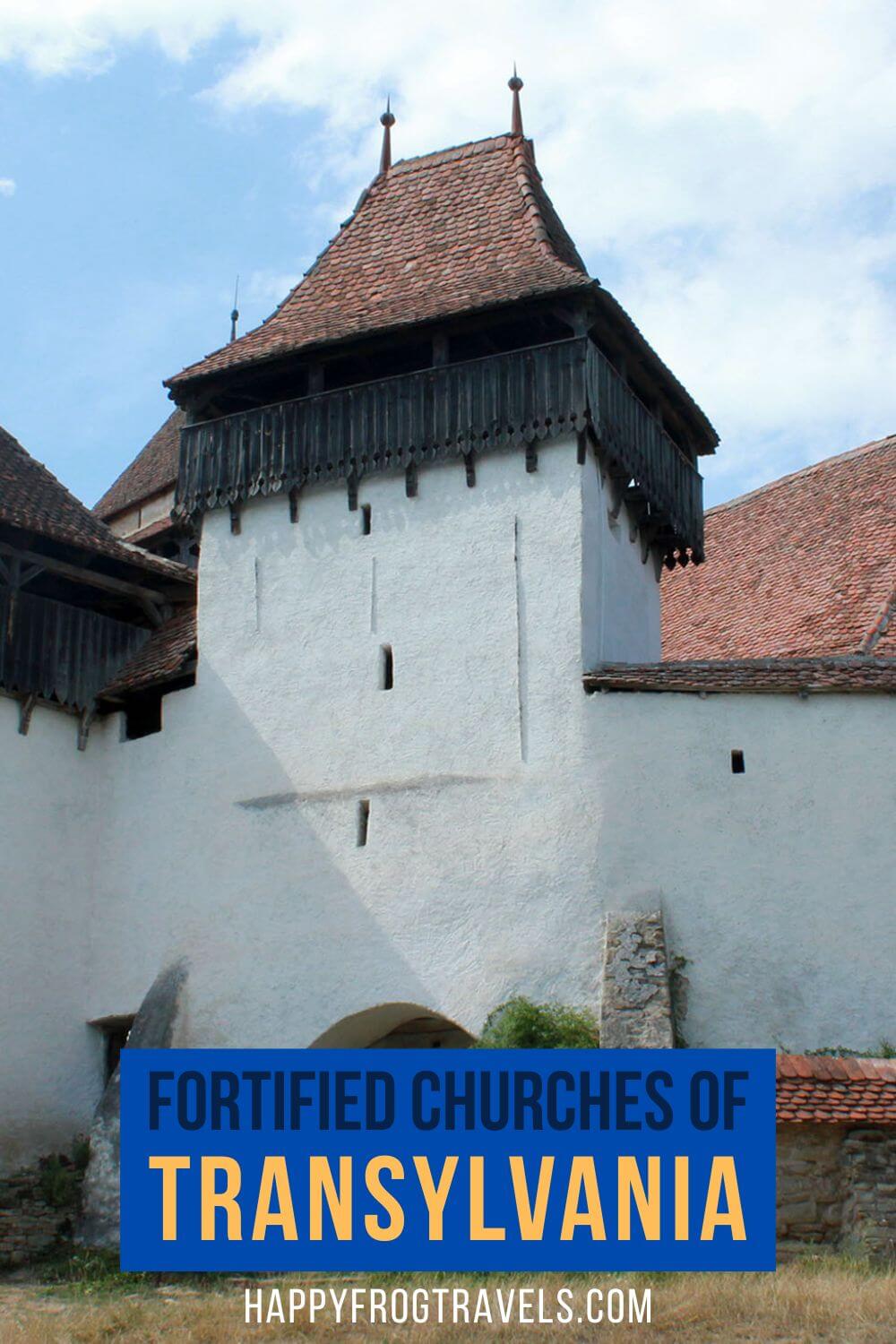
An oval fortification with three towers overlooking the complex surrounds it. The church’s spire functions as another tower. It sits on top of a small hill west of the village center.
Viscri is probably the most popular village in Romania, thanks to King Charles. The UK monarch has been visiting since 1998 and owns a property there. It’s a beautiful 18th-century house that has been turned into a guesthouse.

Saschiz
On the way to Viscri, we stopped at Saschiz fortified church. Located by the main Road No. 13, it is the most accessible church in the area.
Built in the 15th century, it was later fortified, but only the characteristic 17th century tower has survived until today. Both the church and the tower are great examples of the late Gothic style.
Unlike Viscri, Saschiz feels like a small town. There is a green square next to the church, surrounded by the municipal building and a school.

Biertan
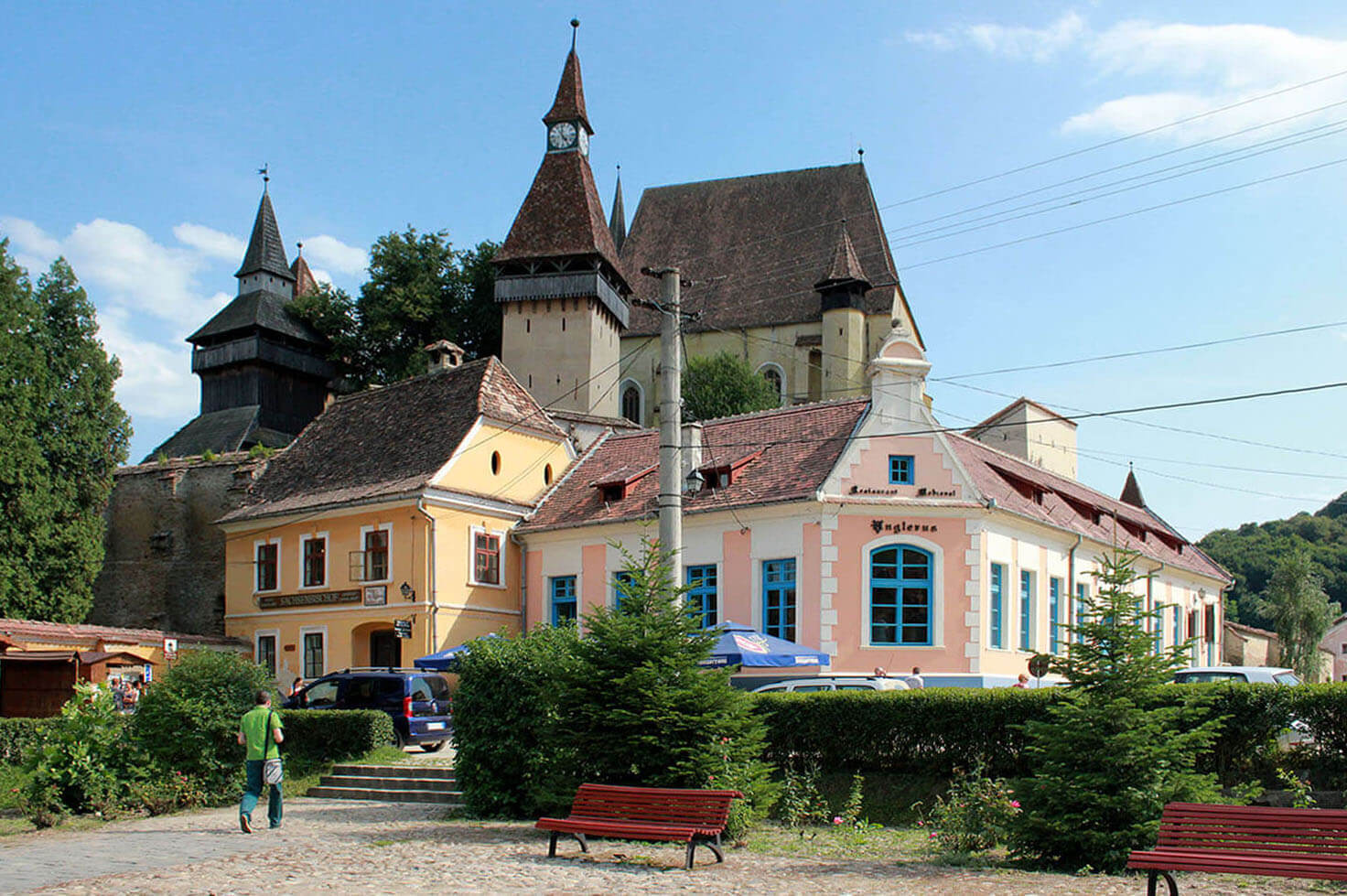
The Biertan fortified church south of Şaroş pe Târnave is a large three nave church, built in the late 15th century in the late Gothic style. It has three different fortifications with nine towers.
Biertan was difficult to get to. The village lies on local road no. 141B, where few vehicles pass by. We had to wait a long time and almost ended up on a truck.
The fortified church is on a small hill, right next to the main square. Of all the fortifications we visited, this one was the most impressive. No wonder, since it was the seat of the Saxon Church for 300 years.

Prejmer
One of the reasons we went to Brașov was to visit its nearby fortified church. Prejmer was originally built by the Teutonic Order, but like the others, it later became Protestant. It was the first church to be added to the UNESCO list in 1993.
Prejmer has one of the most massive defensive walls. The 12-meter-high walls (40 feet) contain four levels, with enough space for the entire village to fit inside. It is the only fortified church with a Greek cross plan.
Unfortunately for us, we visited too late and the doors were closed. We really wanted to see its impressive 15th-century triptych altarpiece. Luckily, a lovely family let us enjoy the view of the church from their fourth-floor apartment.

How to Visit the Churches
The best way to visit the churches is to set camp in beautiful medieval Sighişoara. Four of them are located less than 50 km from the city, mostly in villages off the main roads. We are talking about Viscri, Saschiz, and Biertan.
It took us 2 days hitchhiking to reach 3 of them. While Biertan lies halfway between Sighişoara and Mediaş, Saschiz and Viscri are located on the road to Braşov or not far from. That’s how we ended up spending a few hours in Mediaș, another fantastic place!
To visit Prejmer, you need to go to Brașov first. It is the only fortified church you can actually reach by public transport. You can either take an infrequent train or a regular bus no. 520, like we did.
If you are in Sibiu, we suggest this tour, or this one from Cluj-Napoca. You can also join this tour from Brașov.

Why Visit
Happy Frog is promoting undiscovered locations and alternative ways to travel. Transylvanian fortified churches are still mostly tourist free and are great places to get to know rural Romania.
If you don’t care to drive yourself, the only way to visit them is to take up the challenge of hitchhiking. Romania is currently building several important motorways, so go now, before they are finished, while the existing national roads remain empty.
If you can, spend a night or two in any of the villages. All of them have a very local, unique atmosphere. Our favorite guesthouses are Casa Eva Wagner in Biertan and Viscri 44 in Viscri.



Victor Wouters
What a wonderful story and pictures!!! Thank you!!!
happyfrogtravels
Hi Victor,
Thanks for your comment!
I enjoy so much travelling, I guess you can see that from my texts.
Bianca
Very nice article Milos, also the photos represent România just as it is :)) keep up with the good writing!
happyfrogtravels
Hi Bianca. Thanks so much for your comment! I guess idealising a place doesn’t make much sense, besides I found Romania to be beautiful as it is. I enjoyed so much picturing it!
Katarina
Oh so colorful!
happyfrogtravels
It’s such an amazing place!