


After spending three weeks in Tokyo we felt it was the right time to get to know Japanese nature. Our dream holiday must include a mountain and a beach. Not only Chubu Region offers both but it is quite close to Tokyo.
A Peruvian Japanese friend of ours (thanks Junya!), recommended us the Fuji Five Lakes area around the famous Fuji Mountain. Kawaguchiko is the one best connected to Tokyo (and the coast) so we headed there. The place can be reached by both the scenic Fujikyu Osuki train line and by bus.

Fuji Mountain
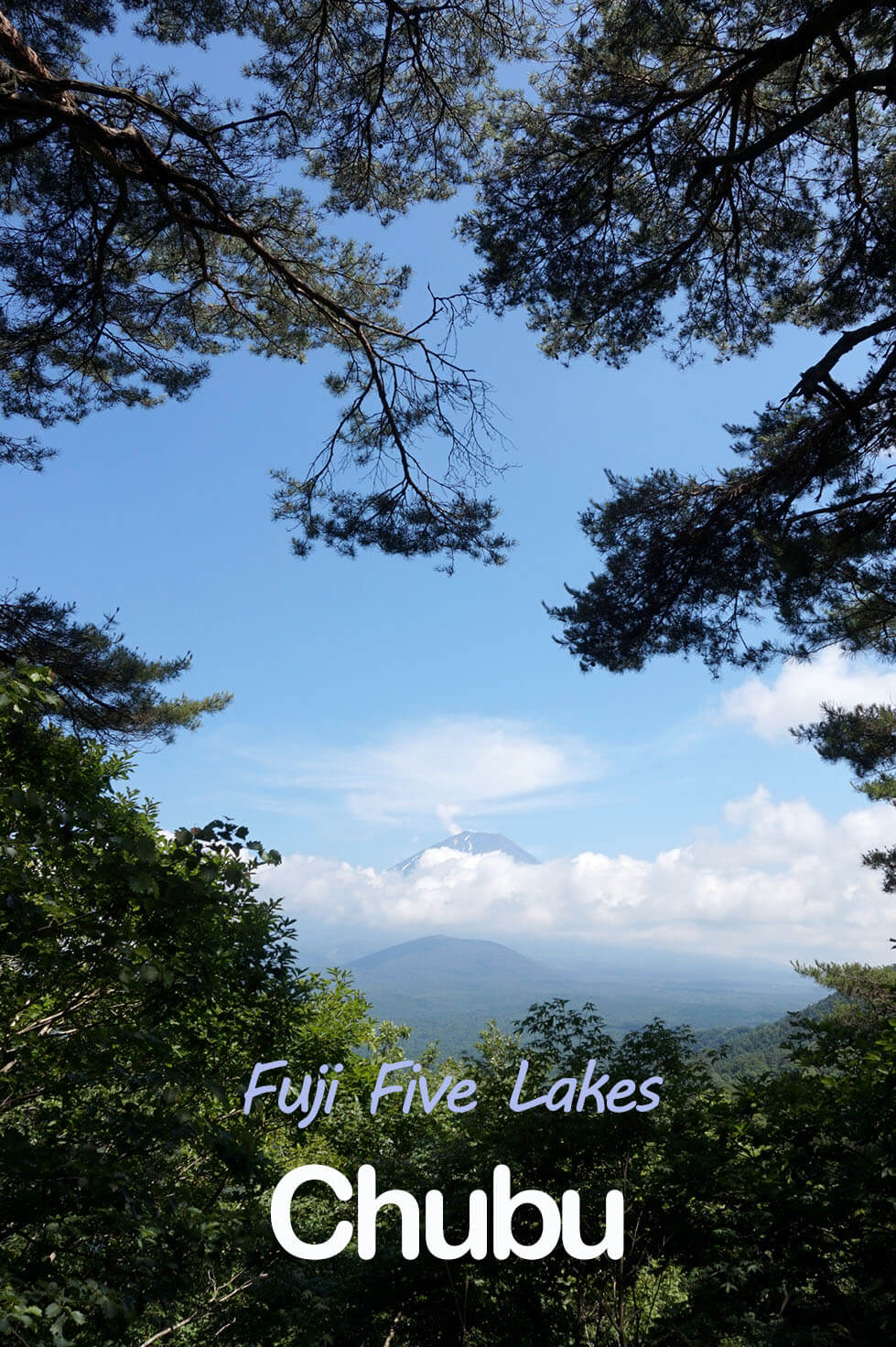
Mount Fuji is undoubtedly Japan’s most famous natural site. Its symmetrical appearance makes it easily recognizable. In fact, Mount Fiji is one of those images that have conquered the entire world. Who hasn’t seen it? However, for the Japanese, Fuji is one of three holy mountains in the country and as such a popular destination for pilgrimage.
Mount Fuji is part of Fuji Hakone Izu National Park. The area is so beautiful that in 2013 UNESCO included the mountain, several local temples, and shrines in its World Heritage Site List. If you are lucky, you can see it from Tokyo on a clear day. Though still considered active, the country’s highest volcano last erupted 300 years ago. If you are planning on visiting the mountain itself check these tips for Mount Fuji.

Fuji Five Lakes – Fujigoko
When our friend suggested visiting Fuji Five Lakes, we didn’t know it was the official name of the area around Mount Fuji in the Yamanashi Prefecture in Eastern Chubu. As you can imagine, the name comes from five lakes: Yamanaka, Kawaguchi, Saiko, Shoji, and Motosu. These lakes were formed thousands of years ago when Mt. Fuji erupted.
Since both the Yamanaka and the Kawaguchi lakes are close to Tokyo and served by great connections, they are popular destinations. People come for a wide range of activities such as boating, yachting, windsurfing, fishing, cycling, and tennis. On the other hand, the Saiko, Shoji, and Motosu lakes are quieter, surrounded by gorgeous nature.

Fujikawaguchiko Town and Kawaguchi Lake
While neighboring Fujiyoshida is a real city, tiny Fujikawaguchiko is more like a town. The town’s epicenter is the train station Kawaguchiko, the end terminal of the private Fujikyu Railway Line. Most shops and restaurants are in the surrounding area, and Kawaguchi Lake is some 10 minutes on foot.
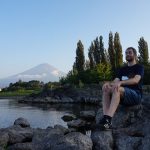
You can walk all around the lake, mostly around urban areas. We spent a day just wondering around this quiet town and two days exploring the other lakes. Our main goal was to contemplate the views over mountain Fuji and to hike around the lakes.

What is Kawaguchiko Like
In a way, most towns in Japan don’t have a name. Instead, towns belong to an administrative unit, including nearby rural areas. Hence, Fujikawaguchiko is indeed a town that encompasses an area of 158 km2 including the four lakes (all except the Yamanaka).
Take note that the only urban area is the one around Kawaguchiko Lake. The rest of the town is uninhabited. It gets more complicated. The Fujikawaguchiko urban area is a section of a larger urban sprawl that goes all the way to neighboring Fujiyoshida.

Kawaguchiko Hotel
After getting to our charming Hotel Koryu we immediately noticed one of Japan’s most pressing issues: its aging population. We were greeted by an older receptionist and a charming older woman dressed up in a Japanese kimono who served us delicious tea. Drinking tea and watching the lake from our window made us so happy.
What made us ecstatic with joy was our hotel’s Onsen, an open air hot spring where we could see the moon and breathe the forest. Hence, after spending the day around the lake, we would go back to our hotel to chill in our onsen. Absolute perfection!

Other Accommodation in Fujikawaguchiko
The Fuji View Hotel has one of the prettiest and biggest gardens in the area. The 4-star property is next to the lake and offers unforgettable views of Mount Fuji. The rooms mix Japanese and Western styles. These are huge and come with splendid views. It’s got an indoor and outdoor onsen.
If you like traditional Ryokans, book a room at the Fuji Onsenji Yumedono Hotel. The 5-star property is in the center. The modern suites and rooms are massive and feature designer furniture. Every room comes with a private natural onsen! The onsite restaurant serves top-notch food.
Saiko, Shoji and Motosu Lakes
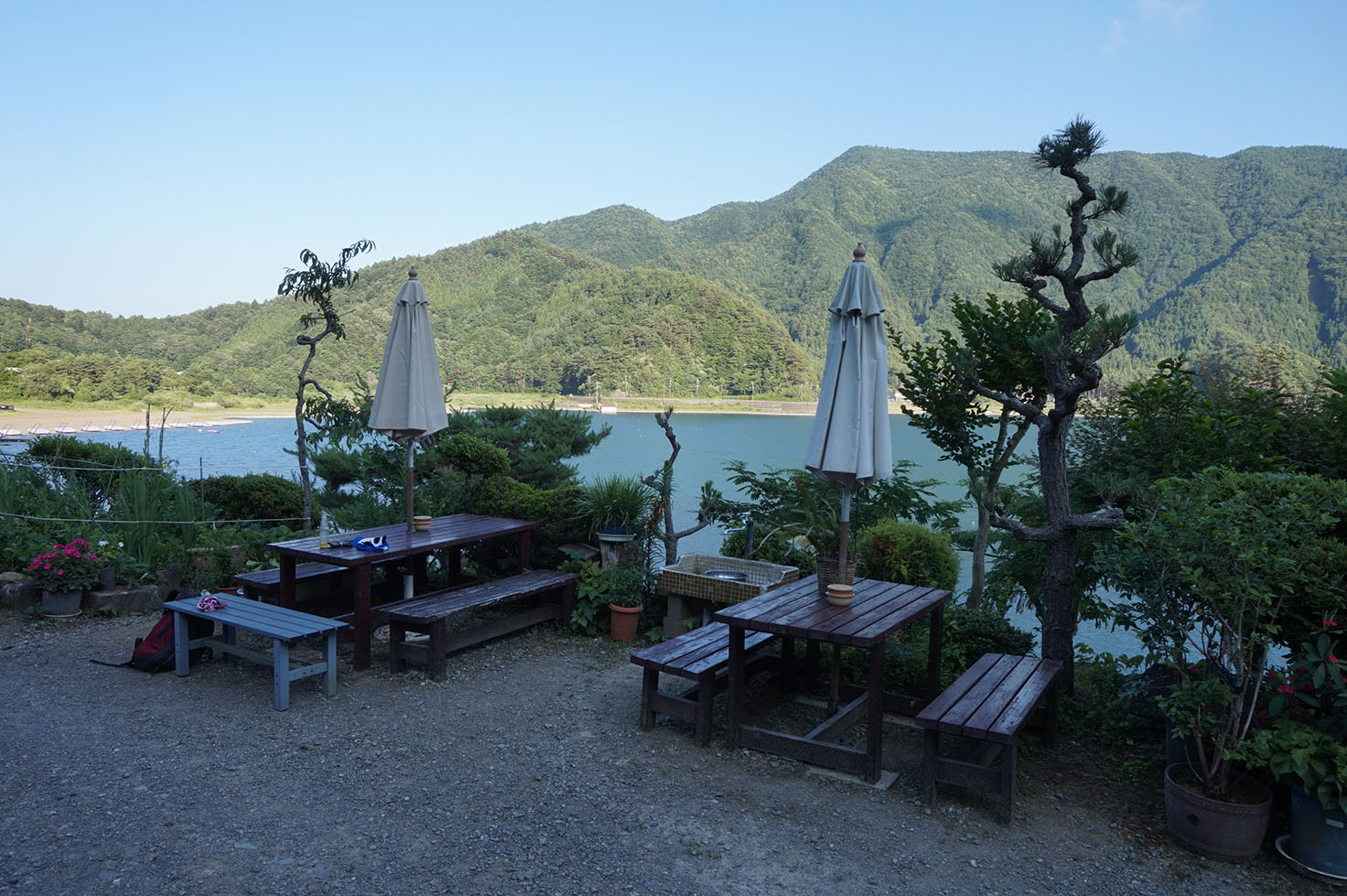
We took a local bus from Kawaguchiko all along the lakes. Taking public transport in Japan is such a pleasure. Everything is on time and clean, drivers are professional and people more than helpful. We exited in the middle of the road and walked along the forest. Then we took another bus to Lake Shoji.
From there we walked through a forest in the middle of the lakes and then took a long hike from Lake Shoji to Lake Motosu through Mt. Eboshi. That’s when we finally surrendered, and Japan conquered us completely. I mean the cities are nice, but nature is truly special. On our way back we had coffee and cake at a small local café overlooking Lake Saiko, and again we were alone enjoying the silence.

Lake Yamanaka and the Road to Izu
After 3 days in Kawaguchiko we took a bus to Atami, in the famous Izu Peninsula. It’s a nice ride along Lake Yamanaka and Mt. Hakone. In Atami we took a local train to Shimoda, the last station on the peninsula. The bus ride was nice, offering sporadic views of Mount Fuji.
However, what is truly special is the train journey around the Izu Peninsula. We first saw the imposing Atami Castle, Japan’s newest. Then we enjoyed countless green mountains opening to the endless blue of the Pacific Ocean. What’s more, the rustic mid-20th-century train we took is in itself an attraction.

Izu Peninsula
Though we were having a great time in Tokyo, we were craving for some nature. Of course, we knew we would visit Mount Fuji from the start, but we had no plans of going to the beach. It was a spontaneous idea! Apparently, Japan’s best beach is on the island of Okinawa in the middle of the ocean. Not an option.
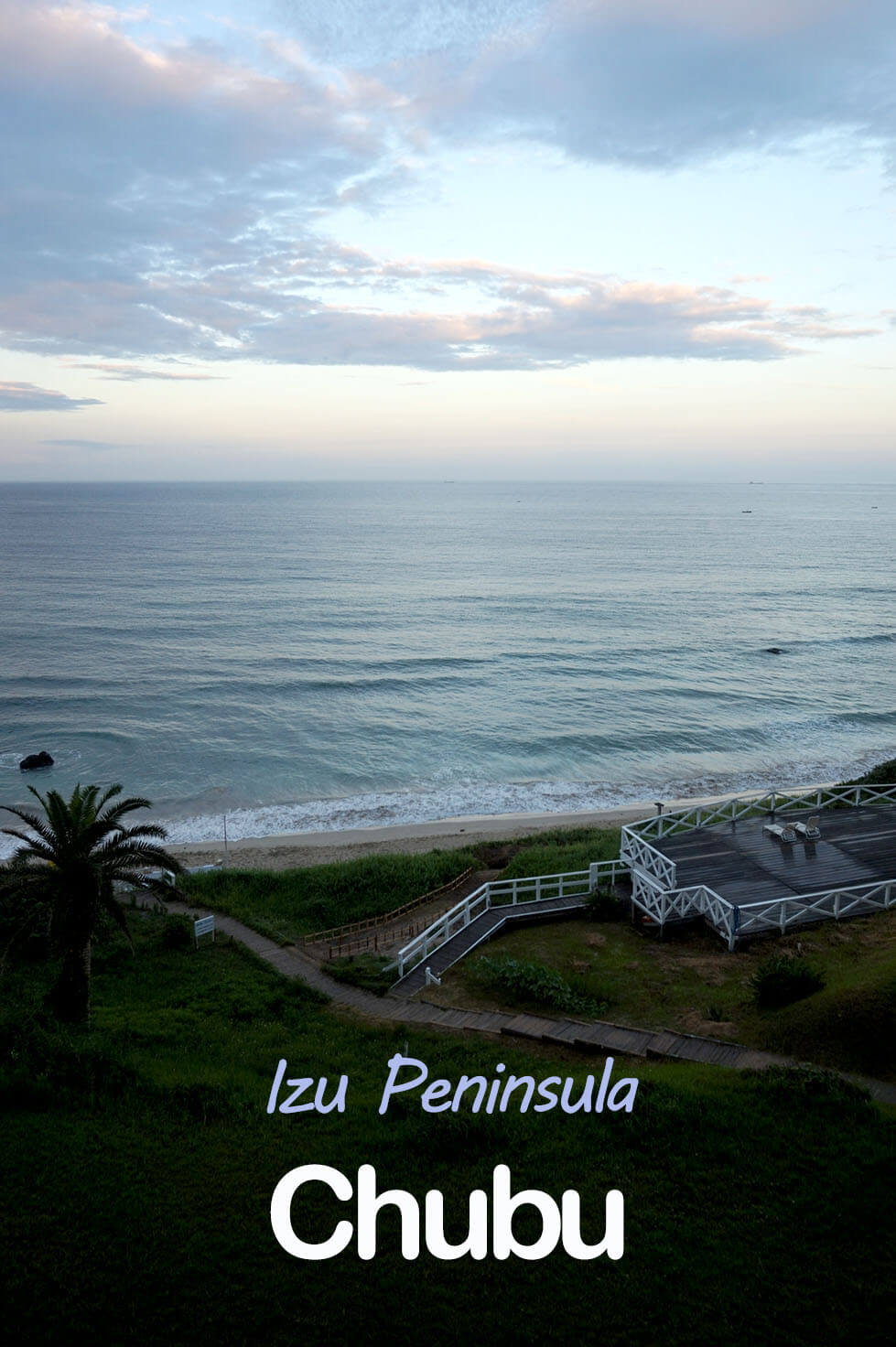
Since we wanted to go somewhere closer, we chose the Izu Peninsula. It did look pretty, but we didn’t expect it to be so beautiful. Just imagine rugged green mountains, a gorgeous coastline, and idyllic beaches. What else could you ask for? In the Izu Peninsula, an onsen next to the beach is a must!

Shimoda Town
The train line finishes at lively Shimoda Town, to the south of the Izu Peninsula. This charming little town lies at the end of a bay surrounded by lush green hills. Due to its strategic location, Shimoda was always important. In fact, during the early Edo period, all vessels traveling from Osaka to Tokyo had to stop here.
Additionally, the USA established its first consulate in Japan here. Today, Shimoda is a resort town popular for its golden sandy beaches. Small Nabetahama Beach on the south is the closest to the city. We went to the much larger Shirahama Beach on the eastern coast.

Shimoda – Shirahama Beach
The larger beautiful Shirahama Beach is visited by alternative Japanese men and women. Everybody is relaxed and tanned, something you don’t see in other parts of Japan. Occasionally small lakes or rivers form in the middle of the wide beach and cute ducks enjoying their time swimming happily can be seen.
Next to the beach there is a small Shinto Shrine, a couple of restaurants and supermarkets. The whole place exudes happiness. We were lucky to visit before the masses arrived, so there were not that many people.

Shimoda Beach Hotel
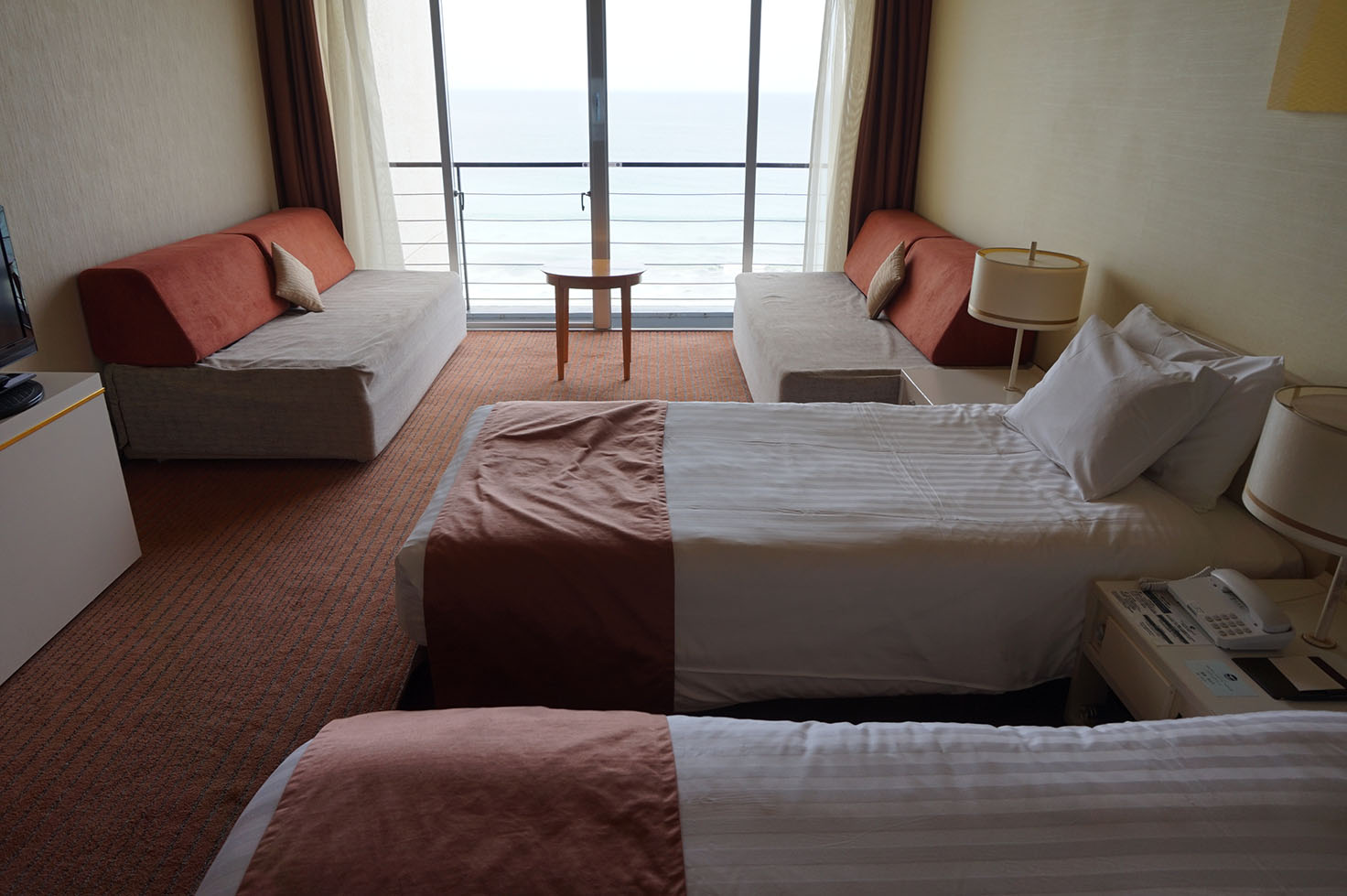
Though Shirahama seemed to be the nicest beach in the area, there are no hotels directly on the beach. Instead, we stayed in adjacent and equally beautiful Shirahama Chuuou Beach. The Shimoda Prince Hotel offers superb comfort, a beautiful private beach and a fabulous Onsen with views to the sea.
We spent three very happy days there enjoying an almost empty beach and watching the sunset from our balcony. Every evening we would watch the moon and the stars rise above the Izu Peninsula from the hot pools of our onsen. Heaven!

Other Accommodation in Shimoda
Considering its class and location, the Hotel Izukyu is great value for money. The contemporary building is next to the beach. It’s got indoor and outdoor onsens and two massive seasonal pools. The Western-style sea view rooms come with a tub overlooking the sea. It’s got a very useful coin laundry.
The Kurofune Hotel is next to the port and close to the station. They offer a free shuttle service to the station. The hotel has a huge pool and a fantastic spa. The rooms are extra big and come with private mineral baths overlooking the bay! Their breakfast and dinner packages are a steal!
Other Interesting Places Nearby
The Yamanashi Prefecture, where the five lakes are, and the Shizuoka Prefecture, where the Izu Peninsula is, are the easternmost prefectures of the enormous Chubu Region. Nearby Kanagawa Prefecture belongs to the Kanto Region, where Tokyo is. Coming from Tokyo, you’ll pass through Hakone right before you reach the Izu Peninsula.
Hakone is another popular destination known for its hot springs, museums, and nice scenery. Besides, many people visit Hakone to enjoy the views of Fuji Mountain. The nearby Odawara houses an impressive 15th-century castle. For those of you a bit more adventurous, we recommend visiting any of the dozen Izu Islands. Each of these beautiful volcanic islands has a distinct character.

How to Travel to Fuji Five Lakes and Izu Peninsula
It is very easy to visit both Fuji Five Lakes and the Izu Peninsula, even for a day trip from Tokyo. Though you can’t do both destinations in a day, one is quite doable. To reach the lakes, take a train to Otsuki on the Chuo Line, and then change trains to the Fujikyu Line to Kawaguchiko. You can also take a direct bus to Kawaguchiko from Shinjuku or Shibuya. Both buses and trains take less than two hours.
From the lakes to the Izu Peninsula you have to take a bus. The bus stops in Atami, from where you can take a local train to Shimoda. From Shimoda, you have to go back to Atami where you can take a regular or fast train to Tokyo. In Atami, you can also catch a direct train to Nagoya or Osaka. Do not worry at all, you will find your way around. If you don’t, do not hesitate to ask at the stations. The Japanese go out of their way to help us lost tourists!

Escaping the Crowds
One of our major complaints (if I may call it that) about Japan is the amount of people you find literally everywhere. But visiting Lake Kawaguchiko and Shimoda in Chubu Province proved to be a fantastic choice. We felt we got to know a genuine softer Japan plus we were able to enjoy nature on our own.
Truth be told, high season begins on June 15th, the day we left, and supposedly it can get very crowded. In recent years, tourism has exploded in Japan and in the rest of the world so the only way to escape the crowds is by carefully planning your holiday. We had the privilege of doing so!

Leave a Reply